As an Amazon Associate, we earn from qualifying purchases. Some links on this site are affiliate links at no extra cost to you. Our recommendations are based on thorough research and editorial judgment.


Cork Footbeds Explained: Cushioning, Odor, and Moisture

Cork footbeds provide natural cushioning thanks to their springy, shock-absorbing cells that ease joint stress—imagine mini trampolines for your feet! They manage moisture by wicking sweat away, keeping feet dry and fresh through breathable, antimicrobial properties that also fight odor-causing bacteria. Plus, cork is eco-friendly, harvested sustainably and biodegradable. Compared to synthetic insoles, cork lasts longer and breathes better. Curious how cork stacks up against other materials? There’s more to explore here.
Key Takeaways
- Cork footbeds provide natural cushioning through shock-absorbing cells that reduce joint impact and enhance comfort.
- Their breathable, moisture-wicking structure keeps feet dry by preventing sweat buildup and promoting air circulation.
- Antimicrobial properties in cork inhibit odor-causing bacteria and fungi, maintaining fresh and healthy feet.
- Cork maintains its shape over time, ensuring consistent cushioning, moisture control, and odor prevention.
- Made from renewable, biodegradable cork bark, cork footbeds offer an eco-friendly alternative to synthetic materials.
Natural Cushioning Properties of Cork
You may be interested

Cork’s unique cellular structure acts like a tiny cushion army, naturally absorbing shocks and smoothing out every step. Cork footbeds offer excellent natural cushioning that reduces pain and fatigue by softening impact forces on joints. How? Their shock absorption is no joke—each cell acts like a mini spring, bouncing back without losing shape, ensuring long-lasting comfort and support. Plus, cork is breathable and moisture-wicking, helping feet stay fresh (no swampy shoe syndrome here!). Its antimicrobial properties add another layer of foot health defense by preventing odor-causing bacteria—because who wants smelly feet? Lightweight yet sturdy, cork footbeds combine comfort and durability in a way synthetic materials only dream about. So, is it any wonder cork is a top choice for those craving natural shock absorption alongside breathable, supportive cushioning? Similar to bamboo, cork’s moisture-wicking properties help reduce sweat and odor, promoting all-day foot comfort.
How Cork Footbeds Manage Moisture

A handful of materials can manage moisture as cleverly as cork footbeds. Cork’s natural structure promotes breathability, allowing air to flow freely around the foot, which keeps moisture from pooling where it shouldn’t. How? Cork is hydrophobic—it doesn’t absorb water like a sponge, so sweat is wicked away rather than trapped. This means a drier environment inside the shoe, enhancing comfort and maintaining foot health. Plus, cork’s antimicrobial properties quietly battle odor-causing bacteria before they throw a party on your footbed. While we won’t explore odors just yet (that’s a topic for later!), it’s clear that cork’s moisture management plays a key role in overall comfort. Imagine a footbed working behind the scenes, keeping you fresh, dry, and happy—now that’s clever engineering! Additionally, cork footbeds contribute to durability and longevity by withstanding wear while reducing environmental impact.
Odor Control Benefits of Cork Insoles
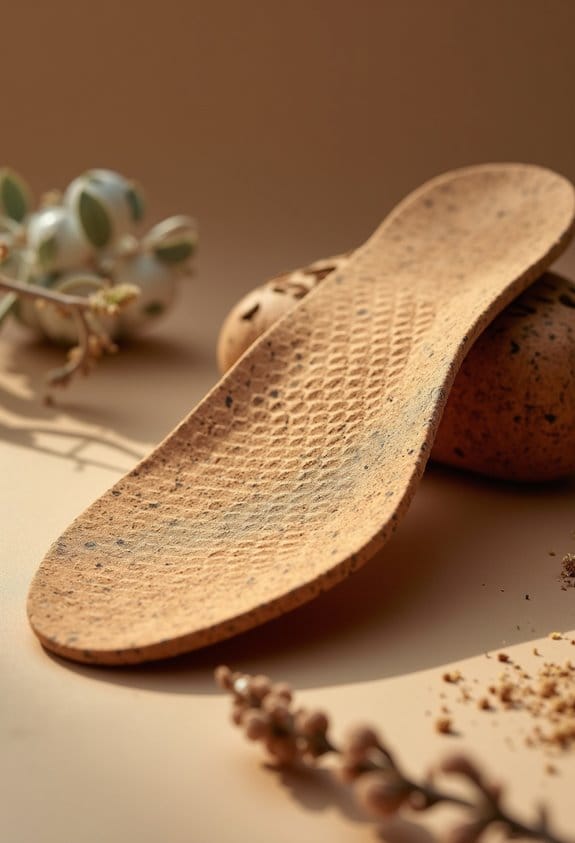
While some shoe materials struggle to keep odors at bay, cork insoles quietly step up as natural odor fighters. Thanks to their unique cellular structure, cork insoles provide excellent breathability, helping feet stay fresh by reducing moisture build-up—the main culprit behind foot odor. Their antimicrobial properties actively inhibit bacteria and fungi growth, which cause that unpleasant smell. What’s more, cork’s moisture-wicking ability absorbs sweat, keeping feet dry and comfortable throughout the day (no more soggy socks!). Unlike synthetic insoles that lose shape, cork maintains its form, ensuring consistent odor control. Plus, being biodegradable, cork insoles offer an eco-friendly way to fight foot odor. Who knew something so eco-conscious could also keep your shoes smelling great? Odor control becomes a breeze with cork! Additionally, cork insoles’ breathability and moisture-wicking properties complement those found in bamboo shoes, enhancing overall foot comfort.
Environmental Advantages of Cork Footbeds

When thinking about eco-friendly footwear, cork footbeds offer quite the environmental win. Made from cork, a renewable resource, these footbeds come from sustainably harvested bark that doesn’t harm the tree—yes, trees can keep their jackets! This sustainable material requires little processing, cutting down carbon emissions considerably compared to synthetic options. Plus, cork is biodegradable, making it a smart, environmentally friendly choice throughout its lifecycle. Cork’s natural moisture absorption supports health benefits by keeping feet dry and comfortable. Beyond materials, cork harvesting sustains rural communities by providing steady income, promoting economic stability. As cork trees grow, they also capture carbon, contributing to climate change mitigation. To sum up, cork footbeds combine practicality and planet-friendly perks—quite the cushy deal for both feet and Earth! Additionally, cork footbeds offer moisture-wicking properties that help maintain foot health and dryness throughout the day.
Comparing Cork With Other Footbed Materials

Environmental benefits are great, but how does cork stack up against other footbed materials in comfort and durability? Cork footbeds excel in cushioning and shock absorption thanks to their unique cellular structure, outperforming materials like EVA that often feel stiff. Unlike memory foam, cork offers long-lasting comfort without losing shape or support over time. Its natural moisture-wicking and breathability keep feet dry and fresh, reducing foot odor and discomfort—a big win over synthetic materials prone to trapping sweat. Plus, cork’s antimicrobial properties help fend off fungal infections, which can sneak up on unsuspecting feet wearing less breathable materials. So, while synthetic footbeds might be trendy, cork footbeds prove that nature really knows best when it comes to comfy, healthy feet (and happier shoes). Additionally, cork’s eco-friendly nature aligns well with the growing sustainability trends in footwear for environmentally conscious consumers.
Frequently Asked Questions
Are Cork Footbeds Good for Your Feet?
Like a well-tailored suit, cork footbeds offer precise support and comfort. Their durability and versatile sizing enhance footwear, while manageable maintenance and stylish thickness guarantee cork footbeds’ lasting benefits in fashion and foot health.
How to Stop Cork Shoes From Smelling?
To stop cork shoes from smelling, regular airing and cork cleaning tips are vital. Preventing odor involves moisture control, foot hygiene, breathable materials, odor resistant sprays, insoles options, shoe maintenance, and long term care to guarantee freshness and durability.
Does Cork Absorb Odor?
Actions speak louder than words; cork properties in natural materials exhibit limited scent absorption, enhancing shoe hygiene and foot comfort. Its moisture management supports foot health, making cork an eco-friendly, sustainable choice for footwear choices seeking durability and odor control.
Are Cork Insoles Good for Sweaty Feet?
Cork insoles excel in moisture control and foot sweat solutions, offering comfort comparison advantages due to insole durability and hypoallergenic materials. They support cork foot health, aiding sweating prevention tips and foot odor remedies across cork footwear styles with notable cork shoe benefits.