As an Amazon Associate, we earn from qualifying purchases. Some links on this site are affiliate links at no extra cost to you. Our recommendations are based on thorough research and editorial judgment.

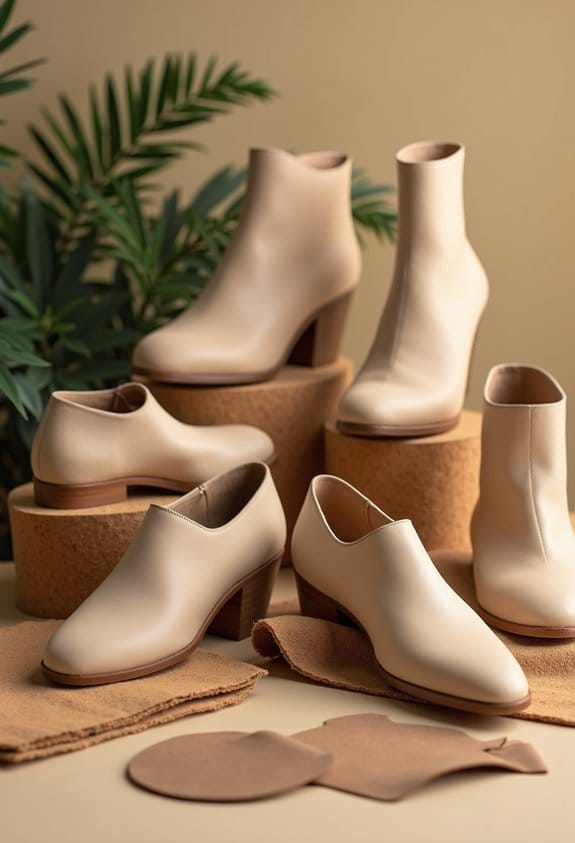
Why Size 13+ Is Harder to Fit: Lasts, Proportions, and Scaling

Fitting size 13+ shoes isn’t just about making everything bigger—imagine enlarging a balloon that then fits oddly! Larger feet need lasts carefully reshaped for proper arch support, width, and girth, since these don’t scale proportionally. Materials must endure extra stress, while limited width options can feel like forcing a foot into a too-tight mitten. Boots add another layer of fitting puzzles with their bulkier design. Curious how designers tackle these quirks? More insights await ahead.
Key Takeaways
- Size 13+ shoe lasts require complex shape adjustments beyond simple scaling to avoid fit distortion and discomfort.
- Foot girth and volume increase unevenly, necessitating wider and more customizable width options for larger sizes.
- Arch support and heel height often don’t scale proportionally, leading to stability and comfort issues in larger shoes.
- Limited manufacturing demand reduces availability of diverse widths, complicating off-the-rack fitting for size 13+ shoes.
- Boot and shoe sizing differ significantly in larger sizes, requiring different last shapes and fitting considerations for comfort.
Challenges in Designing Lasts for Large Shoe Sizes

You may be interested



Tackling the challenges of designing shoe lasts for size 13 and above is no small feat—quite literally! Shoe manufacturers face a tricky balancing act when scaling these larger lasts. It’s not just about making everything bigger; proportional increases can distort fit, causing discomfort. The rise in foot volume at these sizes demands thoughtful adjustments in arch support and subtle width tweaks to maintain comfort and stability. Materials that work well for smaller shoes often don’t hold up under added stress, so choices must prioritize durability and support. Plus, the foot’s shape shifts—broader forefeet and sometimes flatter arches make a one-size-fits-all last nearly impossible. Economies of scale falter here, too, limiting variety and availability for those who need size 13 or bigger. Not the easiest puzzle, but certainly an important one! Incorporating technologies like Fresh Foam X midsoles can significantly enhance comfort in larger shoe sizes by providing tailored cushioning and support.
Variations in Foot Width and Girth at Size 13

Foot width and girth at size 13 and above bring their own set of fitting puzzles—why do bigger feet often mean wider problems? Simply put, foot girth doesn’t scale linearly as shoe sizes increase; size 13 feet can vary widely in thickness, making standard width options feel either too tight or overly loose. Many manufacturers stick to generic width markings, ignoring diverse anatomies like high arches or flat feet that influence width needs. This lack of variety complicates finding comfortable fits off the rack. Consequently, custom-fitting becomes essential for size 13+ wearers, addressing unique foot shapes and girth for superior comfort. Without tailored options, even the snazziest big shoe could pinch or slip, proving that bigger truly isn’t always better in shoe shopping! Incorporating adjustable straps into footwear design can significantly improve fit and comfort for larger sizes.
Impact of Scaling on Arch Support and Heel Height

Even though shoe length grows steadily past size 13, arch support and heel height do not quite keep pace, creating unexpected challenges for bigger-footed wearers. The scaling process often stretches the shoe’s length but leaves arch support relatively low, which can be uncomfortable—especially for those blessed with high arches. Heel height also lags behind, failing to increase proportionately, which may cause stability issues. Does a bigger shoe mean a more wobbly step? Almost! This imbalance amplifies leverage on the heel, risking discomfort and instability during movement. Manufacturers tend to prioritize length over nuanced arch or heel adjustments, so scaling quirks can compromise both comfort and style. Clearly, better scaling tailored to arch support and heel height could enhance performance and wearer happiness for size 13+ shoes. Incorporating arch support features such as cushioned insoles and padded collars can significantly improve comfort and stability in larger sizes.
Limited Width Options for Larger Sizes

A surprising number of shoe options shrink quickly when it comes to width in sizes 13 and up. Limited width options for larger shoe sizes pose a real challenge—most brands only offer standard (D) and wide (E), leaving narrower or extra-wide feet in the lurch. Why is that? Manufacturing wider lasts for size 13+ is less common due to lower demand, making it tougher to get a proper fit that supports foot shape and stability. Without adequate width choices, discomfort often creeps in, as length alone isn’t the whole story. Custom width modifications might help, but they’re rarely available off the rack. So, while longer shoe lengths are easier to find, the width game remains a tricky puzzle for those needing a snuggly—or generously roomy—fit. Ensuring the correct width can reduce the risk of calluses and foot fatigue, leading to improved performance.
Differences Between Boot and Shoe Sizing in Larger Sizes

While bigger boots and shoes might seem like just lengthened versions of smaller ones, their sizing actually plays by a different set of rules. The last shape used for size 13+ footwear often changes to accommodate larger foot proportions, but this scaling isn’t always perfect. Boots, in particular, add complexity: boot sizing demands a snug fit for support, yet bulky materials and wider lasts can leave feet swimming inside. Shoes may stretch or adjust more easily, but boots require a balance of tightness and roominess—tricky when manufacturers aren’t mass-producing styles in these sizes. So the last shape and foot proportions interact differently in large boots versus shoes, making fitting a puzzle where one size definitely does not fit all. Who knew foot fashion involved so much geometry? Additionally, considering comfort and fit is essential, as proper cushioning and breathable materials greatly impact wearability in larger sizes.
Tips for Measuring and Trying On Large-Size Footwear
Since large feet often don’t come in matching sizes, measuring both feet precisely is crucial to finding a perfect fit. Using a Brannock device, one can capture accurate measurements for length and width, especially important when dealing with different sized feet — a common quirk in larger sizes. Measuring at day’s end is smart, as feet swell and can surprise you later! When trying on large-size footwear, fully lacing shoes to the top eyelet guarantees no slippage and better support — because who wants a loose fit? Adding large-size specific insoles can improve comfort by filling volume without sacrificing length. Choosing shoes with lace-up closures helps achieve a precise fit and enhances comfort for bigger feet. These small steps help secure the best fit, turning a potentially frustrating task into a more manageable (and painless) adventure for those wearing size 13 and up.
Frequently Asked Questions
Why Are Size 13 Shoes Hard to Find?
Size 13 shoes often vanish like rare gems, as limited size 13 trends and fashion influences favor average sizes. This scarcity restricts shoe comfort options, leaving larger-footed individuals maneuvering a sparse, challenging marketplace for their perfect fit.
What Is the 3 Shoe Rule?
The 3 Shoe Rule advises owning three pairs to address shoe fitting challenges, accommodating width variance and different foot shapes. It highlights the importance of custom lasts and varied styles for maximum comfort across activities and occasions.
How Tall Should You Be if You Wear Size 13 Shoes?
Individuals wearing size 13 shoes are often around 6 feet 2 inches tall. This shoe sizing reflects a strong height correlation, where foot proportions generally increase with stature, highlighting the body’s remarkable adaptation to balance and support demands.
What Is a Size 13 Equivalent To?
A size 13 equivalent varies by region: US size 13 matches UK size 12, European size 47, and Mondopoint 320 mm. Size conversion depends on foot anatomy and can differ among popular brands due to distinct sizing standards.


