As an Amazon Associate, we earn from qualifying purchases. Some links on this site are affiliate links at no extra cost to you. Our recommendations are based on thorough research and editorial judgment.

Vegan Shoe Materials Checklist: What Counts as Vegan

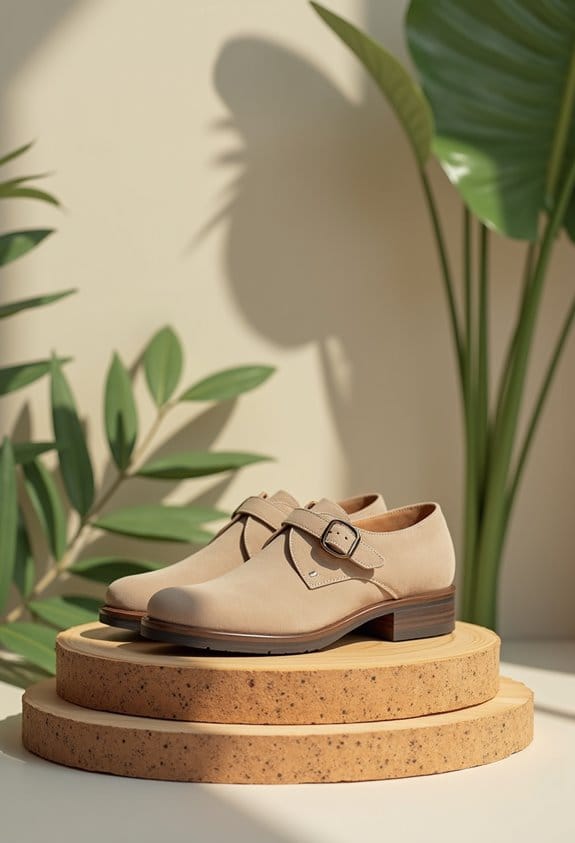
Vegan shoe materials skip animal products like leather or wool, favoring clever alternatives like pineapple leaf fibers (Piñatex), mushroom mycelium, cactus leather (Desserto), and even apple peels—nature’s sneaky fabric hacks! Synthetic leathers made from recycled plastics (think: fashion that fights pollution) also play a big role. Vegan-friendly linings use cotton, hemp, or bamboo, avoiding hidden animal glues. Curious how to spot these on labels or why brands brag about transparency? There’s plenty more to uncover!
Key Takeaways
- Vegan shoes exclude all animal-derived materials like leather, suede, wool, and animal-based glues or dyes.
- Look for plant-based materials like Piñatex, mushroom leather, cactus leather, apple leather, and cork as vegan-friendly alternatives.
- Synthetic leathers such as polyurethane (PU) and recycled plastics are commonly used but verify sustainability and recycled content.
- Vegan shoe linings and insoles often use cotton, hemp, bamboo, natural latex, or recycled synthetics without animal fats.
- Certification labels like the PETA-Approved Vegan badge and diamond symbol confirm genuine vegan footwear materials and ethical production.
Defining Vegan Materials in Footwear
You may be interested



Although the term “vegan materials” might sound straightforward, did you know that these shoes can be made from everything from synthetic polyurethanes to plant-based wonders like cork and pineapple fibers? Vegan shoes must avoid any animal-derived components—including traditional leather, suede, wool, or even glues containing animal products (sneaky, right?). The materials used in vegan footwear often include durable synthetic fabrics like microfiber, as well as recycled plastics or tires, giving old trash new life. Curious how to spot vegan shoes? Look for a diamond symbol on the label, signaling no animal leather here, versus the hide symbol, which means genuine leather. So, vegan shoes blend innovation and ethics by swapping animal leather for smart synthetic and renewable materials, making style kinder for all creatures. Many vegan boots also feature waterproof or water-resistant materials to ensure durability and freshness in various climates.
Common Plant-Based Materials Used in Vegan Shoes
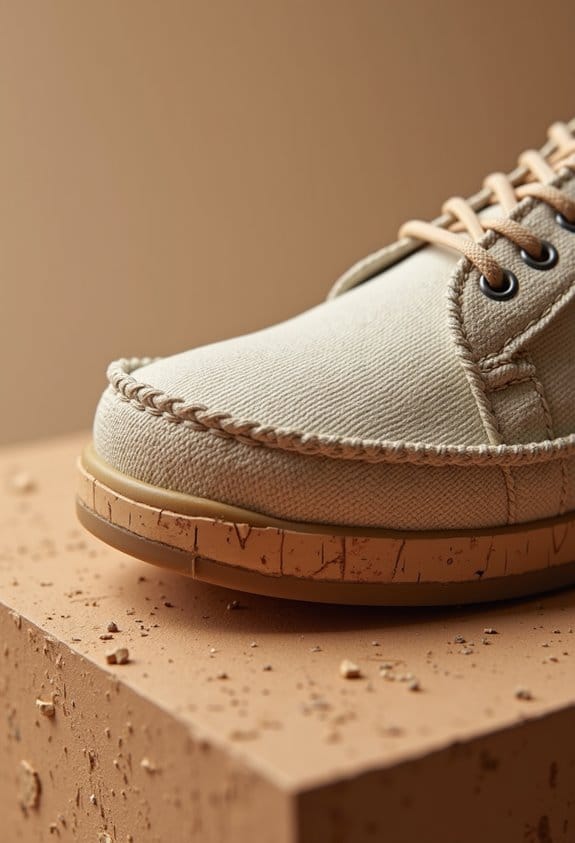
When it comes to choosing plant-based materials for vegan shoes, innovation sprouts from nature’s garden in surprising ways. Vegan shoes often feature alternatives like Piñatex, crafted from pineapple leaf fibers, offering durability without plant cruelty. Mushroom leather, also known as Mylo, impresses with its sustainable mycelium roots, proving fungi can be fashion-forward too! Desserto, the popular cactus leather, combines biodegradability with water-wise farming—who knew desert plants had style? Other materials include apple leather, made from fruit peels (waste not, want not!), although it’s less smooth than traditional options. Cork leather, sourced from tree bark, adds lightweight waterproof charm without harming trees. Together, these plant-based materials provide eco-friendly, stylish choices distinct from synthetic leather, striking a balance between sustainability and performance in today’s vegan shoe market. Additionally, selecting shoes with eco-friendly certifications ensures support for genuinely sustainable practices in production.
Synthetic Alternatives to Animal Leather

While plant-based leathers charm with their natural origins, synthetic alternatives like polyurethane (PU) and polyvinyl chloride (PVC) continue to hold a strong place in the vegan shoe world. These synthetic materials mimic genuine leather’s feel and look without animal-derived materials, making them a popular choice for faux leather enthusiasts. Many vegan leather products now incorporate recycled plastic, turning trash into trendy, durable footwear—talk about recycling with style! Though sometimes criticized for environmental impact, advancements in synthetic vegan leather improve durability and comfort, keeping pace with evolving consumer demands. So, can synthetic really compete with natural options? For many, yes—offering affordable, animal-friendly alternatives that resist wear and tear, all while helping reduce waste. In vegan shoes, synthetic materials remain an essential piece of the cruelty-free puzzle. Additionally, some synthetic leathers are combined with recycled plastic components to enhance sustainability and reduce environmental footprint.
Identifying Vegan-Friendly Shoe Linings and Insoles
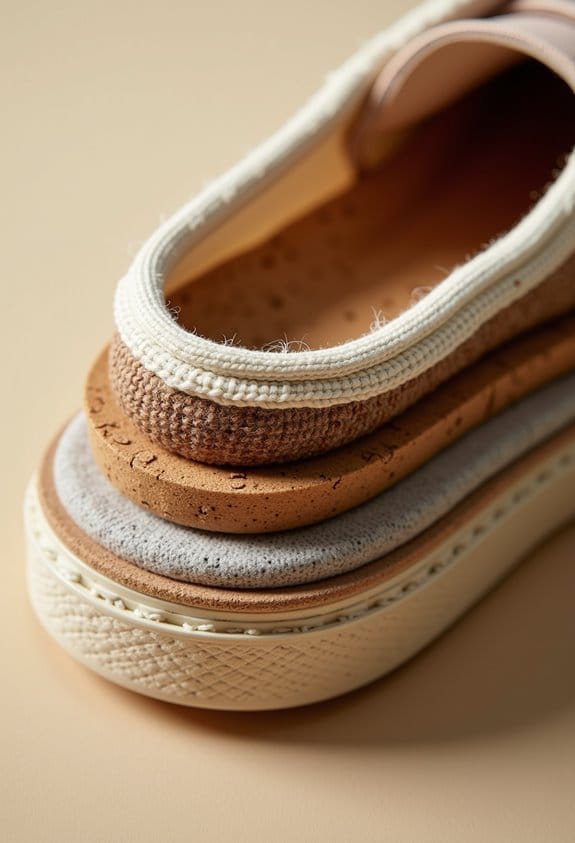
How can one be certain that shoe linings and insoles are truly vegan-friendly? Vegan linings often use cotton, hemp, bamboo, viscose, or recycled synthetics to avoid any animal-derived ingredients—no mystery meat here! Insoles usually mix plant fibers with natural latex and recycled materials, offering comfort without compromising ethics. But don’t just take a wild guess; ethical treatment means manufacturers should disclose these details openly. Certification labels are like badges of honor, confirming the absence of animal fats or glues in linings and insoles. Recycled synthetics add a sustainable twist to vegan footwear’s growing appeal. So, next time you shop, check for transparent info and trusted certifications to guarantee your shoes truly walk the vegan talk! Additionally, opting for materials like biodegradable foams can enhance both the eco-friendliness and vegan integrity of your footwear.
The Role of Adhesives and Dyes in Vegan Shoe Production
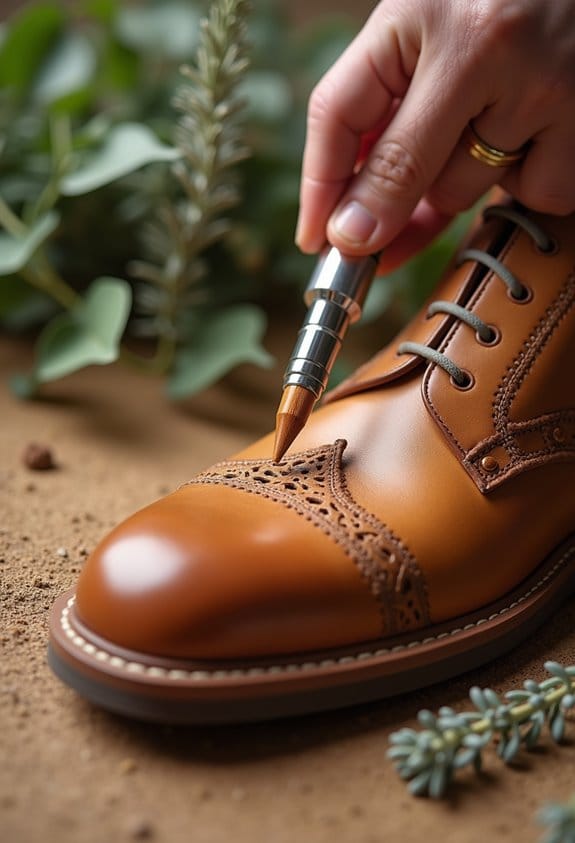
Adhesives and dyes play a surprising but essential role in proving a shoe’s vegan credentials. Historically, adhesives often hid animal-derived ingredients, like glue from bones or hides—yikes! Thankfully, vegan standards now favor synthetic, water-based adhesives, ensuring shoes contain only non-animal materials. But what about dyes? Many traditional dyes also rely on animal-based colorants. Vegan brands smartly opt for plant-based or synthetic alternatives, keeping colors cruelty-free. Consumers increasingly demand transparency, with companies disclosing these formulas, making ethical choices easier. Innovative, eco-friendly adhesives—strong yet sustainable—also align with this animal cruelty–free mission. So, the next time you admire vibrant, bonded soles, remember: it’s not just style but a commitment to cruelty-free craftsmanship that counts! Many vegan casual shoes also incorporate breathable materials that enhance comfort and sustainability by allowing airflow and reducing odor build-up.
Recognizing Non-Vegan Components to Avoid
Several common materials instantly reveal a shoe’s non-vegan nature—genuine leather, suede, and wool top the list. These come straight from animal skin, making them off-limits for vegan shoes. Leather alternatives are great, but watch out—some shoes hide animal-derived glues or dyes that sneak in harmful chemicals. Can you spot them? It’s tricky since labels won’t always shout “I’m non-vegan!” Without a clear Vegan logo, caution is key. Wool, often tucked inside insoles or linings, also counts as non-vegan due to ethical concerns, so avoid it. Choosing shoes means deciding if you want cruelty or kindness on your feet. Even the tiniest animal ingredient matters when chasing truly vegan footwear—there’s a shoe out there for everyone who’s serious about being kind and stylish! Considering options with BLOOM Foam derived from algae can ensure a more environmentally friendly and cruelty-free choice.
How to Read Shoe Material Labels for Vegan Assurance
Spotting hidden animal ingredients in shoes can feel like detective work, but label reading offers a handy shortcut. In the UK and EU, shoe labels reveal essential info about the upper, lining, and sole materials—perfect for sniffing out animal materials. Watch for symbols: a diamond means coated leather, while the animal skin icon means genuine leather. If labels mention “synthetic,” “faux leather,” or plant-based specifics, that’s a vegan-friendly clue! Some shoes even proudly wear the PETA-Approved Vegan badge, certifying no critters were harmed. Curious about sustainability? Many vegan shoes are made from recycled materials, combining eco-conscious fashion industry trends with cruelty-free style. So, next time shopping for a specific product, give the label a glance—it’s like having a secret cheat sheet for vegan assurance! One exciting innovation to look out for is apple leather, an eco-friendly material made from leftover apple peels and cores that offers a sustainable alternative to traditional leather.
Importance of Brand Transparency in Vegan Shoe Manufacturing
Although many shoppers may rely on labels alone, true vegan shoe assurance often comes down to how openly brands share what’s inside their products. Brand transparency reveals whether animal-derived components lurk in unexpected places, like adhesives or inner linings—not always obvious at first glance. By clearly disclosing material sources, brands meet ethical consumer expectations and build trust among those seeking cruelty-free kicks. Who knew sneakers demand so much honesty? Vegan certifications add an extra layer of confidence, signaling verified compliance without endless guessing games. Consumers benefit by researching which brands emphasize openness about production and ingredient sourcing, supporting those committed to sustainable, animal-free footwear. After all, a transparent brand means fewer surprises and more peace of mind in every step toward cruelty-free style. Additionally, many responsible brands prioritize ethical manufacturing practices that reduce environmental impact alongside avoiding animal products.
Verifying Vegan Certification and Logos on Footwear
Trustworthy vegan shoe shopping goes beyond brand promises; it hinges on knowing which marks and badges truly guarantee cruelty-free kicks. Seeking the PETA-Approved Vegan logo is a smart move—it signals the footwear contains no animal-derived materials and has passed strict vegan certification. Check labels carefully: the diamond symbol means the material is synthetic or plant-based, while an animal-hide icon screams genuine leather (a no-go). Curious about a brand’s claims? Investigate their material sourcing and production transparency online or through customer service. Reputable brands often provide detailed, easy-to-find info about their vegan standards. So why guess when shopping? Spotting these signs assures you step out confidently, knowing your shoes align with your ethical values—no animal skins, just stylish, cruelty-free comfort. Additionally, choosing footwear made from sustainable materials like bamboo supports eco-friendly practices while offering natural comfort.
Tips for Maintaining and Caring for Vegan Shoes
Caring for vegan shoes is a surprisingly simple task, once the basics are understood. Unlike leather ones, vegan shoe materials can dry out or crack if exposed to too much heat—so avoid leaving shoes baking in the sun. To maintain their look and durability, regularly clean them with a soft cloth to remove dust and dirt. For extra grime on textured surfaces, a toothbrush works wonders without harming the material. Tough stains? A damp sponge with mild detergent usually does the trick—no harsh chemicals needed. Occasionally, applying a bit of baby oil can restore softness and shine, keeping shoes comfortable and fresh. With this routine care, vegan shoes not only outlast many leather ones but also stay looking great—proof that caring for cruelty-free footwear is easy and rewarding! Additionally, choosing vegan shoes with moisture-wicking properties helps maintain foot health and dryness during wear.
Frequently Asked Questions
How Are Shoes Considered Vegan?
Shoes are considered vegan through strict material sourcing, excluding animal products, embodying footwear ethics. Eco-friendly options, brand transparency, and sustainable practices guarantee cruelty-free, ethical production aligned with environmental and social responsibility standards.
What Does Vegan Mean on a Shoe Box?
Like a medieval knight’s honor, “vegan” on a shoe box signifies commitment to ethical footwear principles, using sustainable materials, ensuring animal rights, employing eco-friendly packaging, and often bearing vegan certifications that guarantee cruelty-free production standards.
What Makes Skechers Shoes Vegan?
Skechers shoes are vegan due to materials used like synthetic fibers and recycled plastics, combined with vegan certification and no animal testing. Their eco friendly and sustainable practices reinforce commitment to cruelty-free, ethical footwear production standards.
What Fabrics Can Vegans Not Wear?
Approximately 80% of leather production involves unethical animal practices. Vegans avoid non vegan materials like leather, wool, silk, and fur—animal derived fabrics—favoring sustainable alternatives and eco friendly options aligned with ethical fashion choices.