As an Amazon Associate, we earn from qualifying purchases. Some links on this site are affiliate links at no extra cost to you. Our recommendations are based on thorough research and editorial judgment.

Mushroom Leather Footwear: Durability, Water Resistance, and Care

Mushroom leather footwear, made from strong yet flexible mycelium, offers surprisingly durable and eco-friendly shoes—ready for walking, dancing, or even a casual splash (but don’t test a swimming pool!). Naturally water-resistant, these shoes fend off moisture without harsh chemicals, though too much water demands some TLC. Cleaning with a damp cloth and storing them cool and dry keeps them comfy and long-lasting. Curious how they stack up environmentally and how to care best? There’s more to uncover.
Key Takeaways
- Mushroom leather footwear offers strong tensile strength and flexibility, making it durable for activities like walking and dancing.
- Its natural mycelium base provides inherent water resistance without toxic coatings, though excessive moisture can cause temporary absorption.
- Cleaning requires gentle wiping with a soft cloth dampened in cold water, avoiding harsh chemicals and soaking to protect fibers.
- Conditioning with vegan leather products and regular care maintain softness and prevent cracking in mushroom leather footwear.
- Store shoes in cool, dry places away from sunlight, using breathable bags or boxes, ensuring they are dry to avoid damage or mold.
Understanding the Durability of Mushroom Leather
You may be interested

Mushroom leather, crafted from mycelium—the root-like structure of mushrooms—offers a surprising blend of durability and eco-friendliness that challenges traditional leather’s reign. This innovative material boasts impressive tensile strength, making it both flexible and strong—ideal for footwear that can take a daily stroll or a sudden dance-off. While mushroom leather is biodegradable (goodbye landfill guilt!), it still requires regular cleaning and proper care to stay in top shape and prevent cracking. Its mild water resistance means it can handle occasional splashes, but don’t go swimming with it just yet. Eco-conscious consumers find this material appealing since it combines durability with sustainability, proving care for the environment doesn’t mean sacrificing quality. Who knew a fungus could be so fashionable—and so tough? Additionally, mushroom leather sneakers tend to have better water and stain resistance than many traditional leathers, enhancing their practicality for everyday wear.
Water Resistance Properties of Mushroom Leather Footwear
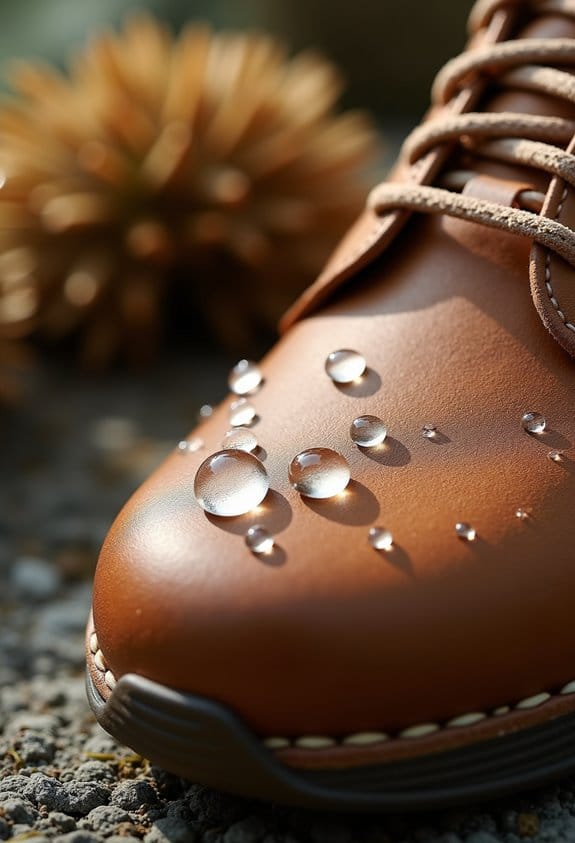
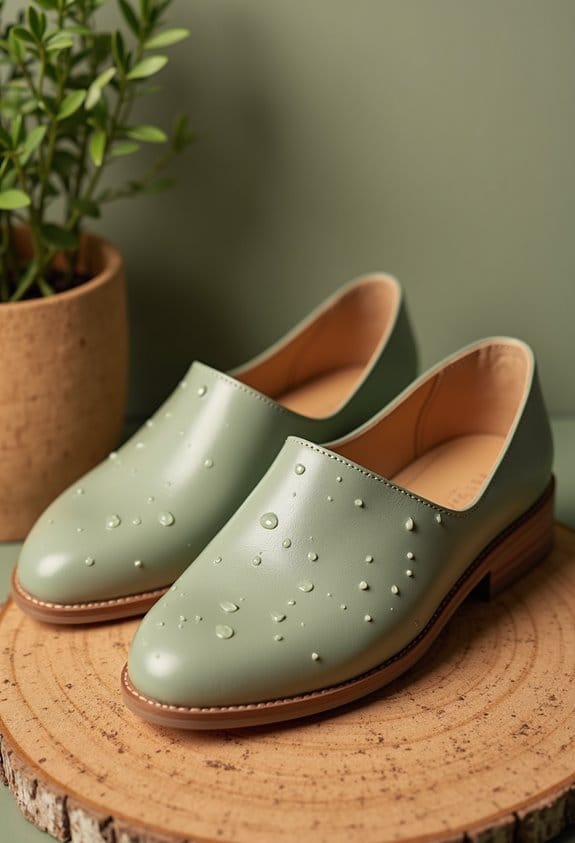
Thanks to its mycelium origins, this leather-like material carries natural water resistance that surprises many. Mushroom leather, used increasingly in footwear applications, offers a moisture repellent quality without relying on toxic coatings common in synthetic leathers. Cool, right? Its water-resistant nature stems from careful processing that boosts durability while supporting sustainable production. However, it’s not invincible—excessive water exposure can lead to temporary absorption, so maintenance and care are vital to keeping those shoes happy. Proper storage away from damp environments also preserves its protective layer. While it might soak up some moisture when caught in the rain (oops!), mushroom leather dries out without lasting damage if handled promptly. This balance of natural water resistance and eco-friendly manufacturing makes mushroom leather a smart choice for conscious consumers wanting durable, moisture-savvy footwear. Additionally, surface treatments often include eco-friendly waxes or sealants that enhance water resistance without compromising sustainability.
Proper Cleaning Techniques for Mushroom Leather Shoes
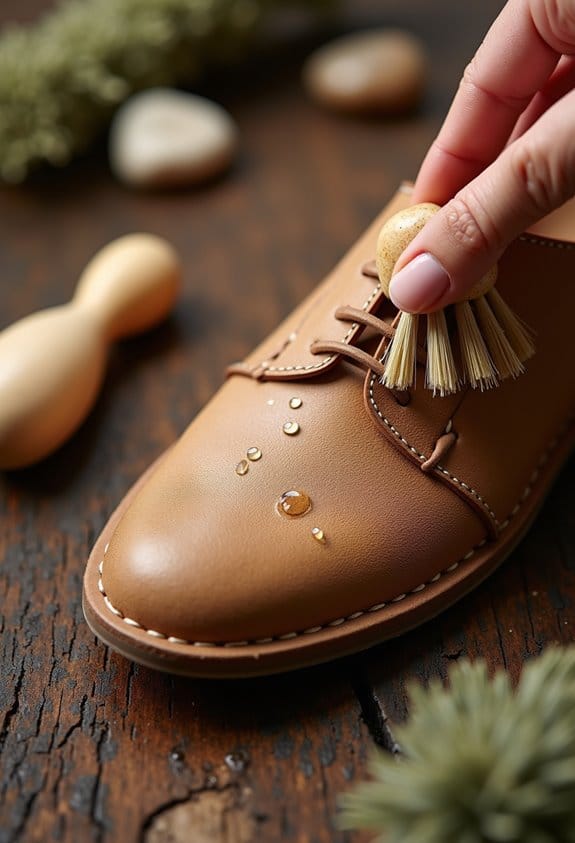
Cleaning mushroom leather shoes properly plays a big role in keeping them looking fresh and feeling comfortable. So, how should one approach these eco-friendly wonders? Start with gentle cleaning techniques: use a soft cloth dampened with cold water to wipe away dust and dirt. Harsh chemicals? Definitely a no-go—they damage the natural fibers and reduce durability. Mushroom leather boasts water resistance, but excessive water can still cause harm, so avoid soaking. For a deeper clean, hand wash carefully with a damp sponge and cold water, preserving the vegan leather’s unique texture. Regular care includes conditioning with products made for vegan leather, which helps maintain softness and prevent cracking. With proper cleaning and care, mushroom leather shoes can stay striking—and comfy—for many steps to come! Additionally, using a vegan-friendly conditioner can enhance flexibility and extend the lifespan of these sustainable shoes.
Best Practices for Storing Mushroom Leather Footwear

Where should eco-friendly footwear rest when not on the move? Mushroom leather shoes need storage in a cool, dry spot, out of direct sunlight, to avoid fading and material wear. Breathable shoe bags or boxes offer smart protection from dust, while allowing air flow—key to preventing pesky mold or mildew. Moisture? Make sure to dry footwear completely at room temperature before storing; damp shoes can invite trouble like fungal growth (nobody wants that). Avoid stacking items atop them to keep shape intact—nothing wrinkled, please! Regular checks and rotating stored pairs help maintain durability and preserve water resistance. Such mindful care doesn’t just extend use; it honors mushroom leather’s role as sustainable material with low environmental impact. Additionally, considering the breathability and ventilation of the material during storage can further prevent moisture-related damage and promote footwear longevity. Ready to treat your shoes right? Storage is more than a spot—it’s protection and respect!
Environmental Benefits of Choosing Mushroom Leather
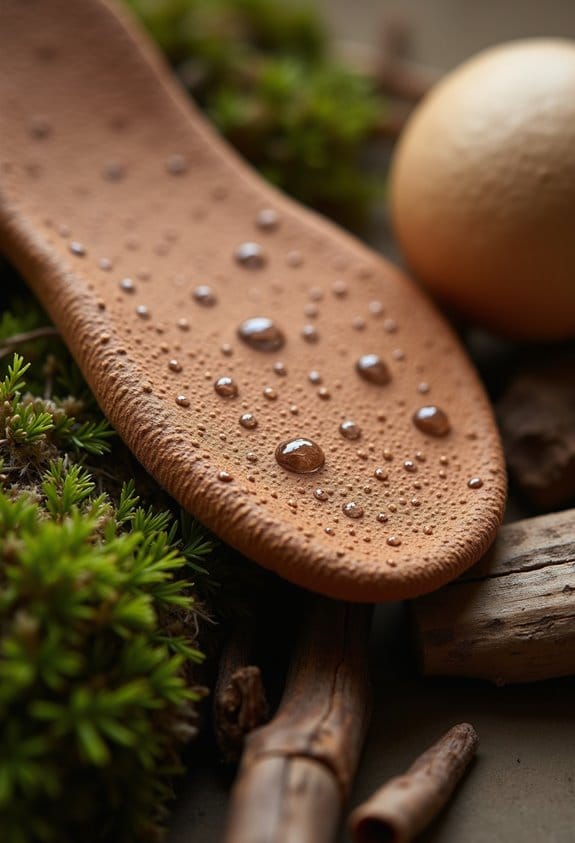
Storing mushroom leather shoes carefully is just one way to appreciate their unique qualities, but what truly sets this material apart is its environmental footprint—or rather, lack thereof. Mushroom leather, crafted from mycelium grown on renewable agricultural waste, minimizes resource consumption while offering a cruelty-free alternative to traditional leather. Unlike livestock farming—which accounts for 14.5% of global greenhouse gas emissions—mushroom leather production markedly helps reduce greenhouse gas emissions and uses far less water. Plus, it’s biodegradable, naturally decomposing without leaving pollution (sorry, synthetics!). This aligns perfectly with sustainable fashion goals and reduces ethical concerns related to animal welfare and toxic tanning chemicals. With built-in water resistance and a safer production environment, mushroom leather is paving the way for eco-friendly, stylish footwear choices. Who knew saving the planet could look this good? Additionally, choosing materials like mushroom leather promotes eco-friendly production methods that reduce chemical use and water consumption in the fashion industry.
Frequently Asked Questions
Is Mushroom Leather Waterproof?
Mushroom leather properties include natural water resistance but it is not fully waterproof. As a plant-based leather from mycelium cultivation, it represents eco-friendly materials and vegan alternatives, promoting sustainable fashion and biodegradable options within footwear innovations and environmental impact.
How Long Does Mushroom Leather Last?
Like a timeless Roman toga, mushroom leather lasts several years, balancing sustainability impact and fashion trends. Its eco-friendly materials, biodegradable benefits, and vegan alternatives boost consumer perception, while production processes limit microbial growth, enhancing environmental advantages and market availability.
What Are the Pros and Cons of Mushroom Leather?
Mushroom leather offers sustainability benefits, ethical production, and reduced environmental impact, appealing to consumer preferences and fashion trends. However, higher cost comparison, limited market availability, specific care instructions, and durability concerns remain potential drawbacks despite animal welfare advantages and a unique manufacturing process.
How Durable Is Mycelium Leather?
Mycelium leather weaves durability like nature’s tapestry, balancing mycelium properties with eco-friendly materials and an innovative production process. Its sustainability benefits, comfort level, cost comparison, and positive consumer perceptions reflect shifting fashion industry and environmental impact trends.