As an Amazon Associate, we earn from qualifying purchases. Some links on this site are affiliate links at no extra cost to you. Our recommendations are based on thorough research and editorial judgment.


Cactus Leather for Footwear: Pros, Cons, and Durability

Cactus leather for footwear blends sustainability with style, crafted from nopal cactus requiring hardly any water—a win for thirsty planet Earth! Lasting 5 to 10 years, it’s breathable, lightly water-resistant, and durable against scuffs. However, it’s not fully waterproof and pricier than some synthetics, lacking the classic leather patina aficionados adore. Curious how it stacks up against traditional and synthetic leathers or demands special care? There’s plenty more to uncover about this prickly, planet-friendly material!
Key Takeaways
- Cactus leather offers lightweight, breathable, and durable footwear lasting 5 to 10 years with proper care, making it a practical vegan alternative.
- It requires significantly less water and uses non-toxic materials, making it an eco-friendly choice compared to conventional and synthetic leathers.
- The material resists scuffs, tears, and UV damage but lacks traditional leather’s aging patina and full waterproof capability.
- Limited production and higher costs can reduce availability and affordability for some consumers.
- Cleaning with a damp cloth, using plant-based conditioners, and storing in dry, ventilated areas prolong cactus leather footwear lifespan.
The Origin of Cactus Leather
You may be interested



Cactus leather, sometimes called nopal leather, is a fascinating eco-friendly material that first sprouted into commercial life in 2019. Created by Adrián López Velarde and Marte Cázarez of Desserto, this plant-based leather is a sustainable alternative to traditional animal hides. Harvested from the resilient nopal cactus native to Mexico, it requires minimal water—perfect for those worried about the planet’s thirst. Isn’t it remarkable that durable, leather-like material can grow on a prickly cactus? With its debut at Milan’s Lineapelle International Leather Fair, cactus leather grabbed attention as a promising player in eco-friendly materials. Desserto’s innovation not only offers a cruelty-free option but also aligns with rising consumer demand for sustainable products. Could this be the future of fashion’s greener side? The harvesting process involves collecting mature cactus pads without killing the plant, ensuring sustainable regrowth and ecological benefits.
The Manufacturing Process of Cactus Leather

Although it starts quite naturally, the journey from prickly plant to soft, wearable material is not as simple as it seems. The manufacturing process of cactus leather begins with sustainable harvesting of mature leaves from the nopal cactus plant, carefully cut without killing it—talk about eco-friendliness in action! These leaves are cleaned to remove thorns and sun-dried into a fine powder. Next, this powder mixes with bio-resin made from non-toxic chemicals and natural binders, forming a durable material that can stand up to daily wear. Spread onto a backing and cured, it becomes a flexible product resembling traditional leather. All this happens with far less water to grow and a smaller environmental footprint than conventional leather. Similar to apple leather, cactus leather is part of a growing movement toward sustainable leather alternatives that reduce environmental impact. Who knew cactus could be so tough yet gentle on the planet?
Environmental Benefits of Cactus Leather

Sustainability doesn’t have to be complicated—sometimes, it’s as simple as using a plant that barely drinks water! Cactus leather, made from the drought-resistant nopal cactus, offers an environmentally friendly alternative to traditional animal skins and synthetic materials. It requires far less water—no 8,000-gallon leather jacket situations here—and grows back after harvesting, making it a true renewable resource. Plus, it’s partially biodegradable, so it won’t linger in landfills like pesky plastics. With non-toxic chemicals used in its production, cactus leather reduces environmental harm considerably. For eco-conscious consumers craving sustainable fashion, it’s a clever way to cut down on plastic waste by up to 42%. Another plant-based option gaining traction is pineapple leather, which also promotes sustainable practices by utilizing agricultural waste while reducing carbon emissions. Who knew being kind to the planet could feel this good on your feet?
Comparing Cactus Leather and Synthetic Alternatives

When choosing materials for eco-friendly footwear, water use is a huge factor to take into account—did you know that synthetic leathers like PVC and PU guzzle far more water than plant-based alternatives? Cactus leather stands out as a sustainable alternative, requiring minimal water thanks to its origin from hardy plant sources. Unlike synthetic leathers, which often trap heat and feel less breathable, cactus leather offers excellent breathable properties, keeping feet cooler and comfier. Plus, it’s partially biodegradable, breaking down more easily than plastics that could take centuries to vanish. Synthetic leathers may include plastic parts that dampen their eco-friendly appeal, but cactus leather remains a natural champion with superior abrasion resistance and durability. So, isn’t it time to give this plant-powered material some well-deserved credit? Mushroom leather, made from mycelium, similarly exemplifies how innovative natural materials can offer durability and sustainability advantages over traditional leathers.
Durability and Longevity of Cactus Leather Footwear

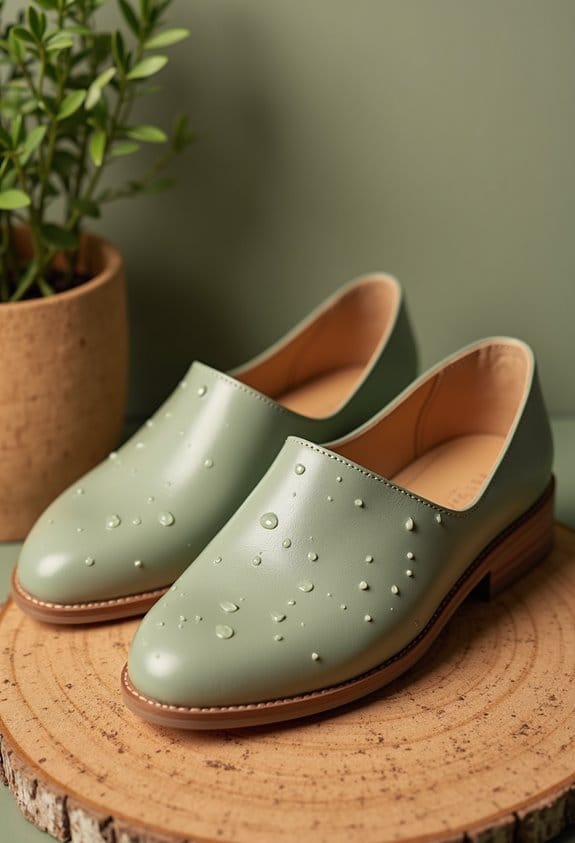
Since durability often decides a shoe’s fate, cactus leather footwear impresses by lasting anywhere from five to ten years with proper care—a solid run that rivals many mid-range animal leathers. Its abrasion resistance means these shoes shrug off scuffs, tears, and even UV rays, maintaining their shape and spirit on daily adventures. While cactus leather is water-resistant thanks to bio-based polyurethane, it’s not waterproof, so avoiding puddles is wise. Maintenance is key: regular cleaning with a damp cloth and application of plant-based conditioners boost durability and keep the material supple. Bonus? This footwear is lightweight, enhancing comfort without sacrificing toughness. Who knew eco-friendly could also mean long-lasting and comfortable? It’s a win-win for feet that want to persevere and style that won’t quit. Cactus leather also offers breathable material properties similar to mushroom leather, contributing to foot comfort and extended wear time.
Advantages of Using Cactus Leather in Footwear
Beyond just lasting several years, cactus leather offers a handful of benefits that make it a smart choice for footwear. As a vegan leather and sustainable alternative, it uses minimal water during production—impressive, considering traditional leather’s thirst. Cactus leather is naturally breathable, keeping feet cool and dry, which is great for summer adventures. It’s also tough and lightweight, so your shoes won’t weigh you down but will still handle regular wear with durability. With proper care, these shoes can enjoy a comparable lifespan to mid-range animal leather, lasting about 5 to 10 years. Who knew plant power could deliver such performance? For those seeking eco-friendly, comfortable, and long-lasting footwear, cactus leather hits the mark without sacrificing style or function. Additionally, its natural breathability contributes significantly to foot freshness and overall comfort during wear.
Challenges and Limitations of Cactus Leather
A few key hurdles still stand in the way of cactus leather becoming the next big thing in footwear. For starters, its durability falls short compared to traditional leather, lasting only 5 to 10 years—less than half the lifespan of top-quality animal leather. Limited availability and modest production capabilities also hinder scaling up to meet rising consumer demand. Material costs remain high, making cactus leather footwear pricier than many shoppers want. While cactus leather boasts some water resistance, it isn’t fully waterproof, so shoes need care to avoid moisture damage—no cactus rain boots just yet! Plus, the lack of that prized aging patina means it might not charm classic leather lovers. So, despite its eco-friendly allure, cactus leather faces uphill battles in the footwear market’s competitive landscape. Additionally, the importance of waterproofing and breathability cannot be overlooked when considering alternative materials for long-lasting footwear.
Caring and Maintaining Cactus Leather Shoes
Many cactus leather shoes benefit from regular cleaning with a simple damp cloth—nothing harsh or chemical-laden, please! Clean cactus leather gently to remove dirt and avoid stains, since avoiding harsh chemicals is key to maintaining this plant-based material. While cactus leather footwear boasts water-resistant properties, prolonged exposure to moisture can cause damage or discoloration. After cleaning, letting shoes air dry naturally at room temperature helps preserve their shape (no hair dryers allowed!). To keep them soft and flexible, applying a plant-based leather conditioner now and then works wonders. Storage matters too—cool, dry, ventilated spaces keep mold away and freshness intact. Following these maintenance tips in caring for shoes not only protects your investment but can also extend lifespan, proving even trendy, eco-friendly footwear likes a little tender loving care! Unlike some materials, cactus leather does not require special storage but should be kept away from direct sunlight to prevent fading and cracking, much like hemp shoes.
Frequently Asked Questions
How Durable Is Cactus Leather?
Cactus leather’s durability aligns with mid-range animal leathers, benefiting from advanced manufacturing processes enhancing cactus leather properties. Its sustainability comparison and vegan alternatives appeal to the fashion industry, influencing consumer perception and market trends despite requiring specific care techniques.
What Are the Disadvantages of Cactus Leather?
Disadvantages of cactus leather include limited market availability and high price compared to traditional leather. Production challenges and sourcing practices impact its sustainability. Consumer perception varies, with concerns about environmental impact, ethical considerations, and maintenance influencing fashion trends.
What Are the Benefits of Cactus Leather?
Cactus leather benefits include sustainable fashion appeal, eco friendly materials’ usage, and vegan alternatives reducing environmental impact. It supports ethical production, inspires innovative designs, influences the fashion industry, and appeals to trend awareness with durable, plant based textiles.
Can Cactus Leather Get Wet?
Like a delicate flower, cactus leather can withstand light moisture but not heavy rain. Proper cactus leather care includes drying techniques, stain removal, and maintenance practices to prevent water damage, manage humidity effects, and guarantee longevity in wet conditions.