As an Amazon Associate, we earn from qualifying purchases. Some links on this site are affiliate links at no extra cost to you. Our recommendations are based on thorough research and editorial judgment.


Is Faux Leather Always Worse for the Planet? A Nuanced Take

Is faux leather always bad news for the planet? Not quite! While faux leather’s carbon footprint trips lightly at about 15.8 kg CO2e per square meter—much less than cowhide’s hefty 110 kg—it often leans on fossil fuels and plastic, which stick around in landfills like uninvited guests. Plus, microplastics mess with marine life. But surprise! Innovations like pineapple and cactus leather promise greener, biodegradable options. Curious how the real and fake compare? Stick around for the full scoop!
Key Takeaways
- Faux leather has a smaller carbon footprint (15.8 kg CO2e) compared to real leather (110 kg CO2e) but relies on fossil fuels and plastics.
- Production of PVC and PU faux leather emits toxic chemicals and contributes to persistent microplastic pollution harming ecosystems.
- Real leather involves deforestation, high water use, and toxic tanning chemicals, creating significant environmental and ethical concerns.
- Innovative vegan leathers from pineapple, fungi, apples, cactus, and grapes offer biodegradable, sustainable alternatives with lower resource use.
- Evaluating faux leather’s impact requires considering material source, production processes, biodegradability, and lifecycle transparency for informed choices.
Understanding Faux Leather Materials and Their Environmental Footprint
You may be interested


Although faux leather—often made from polyvinyl chloride (PVC) and polyurethane (PU)—avoids animal cruelty, it presents its own environmental puzzles, doesn’t it? Faux leather, a type of synthetic leather, boasts a smaller carbon footprint—around 15.8 kg CO2e per square meter—compared to traditional cow skin leather’s hefty 110 kg. However, this eco-friendly alternative isn’t all sunshine. Being plastic-based, it contributes to microplastics pollution and typically endures a non-biodegradable lifecycle of up to 15 years. Plus, the energy-intensive production can release harmful chemicals. Consumers beware of greenwashing! Products often marketed as “eco-friendly” might still rely heavily on fossil fuel–derived polyurethane. So, while faux leather helps animal welfare, its environmental impact demands closer scrutiny—proof that not all that glitters (or feels like leather) is purely green! For those seeking sustainable footwear options, materials like plant-based alternatives offer promising cushioning and durability without the environmental drawbacks of plastic-based faux leather.
The Ethical Considerations Beyond Carbon Emissions
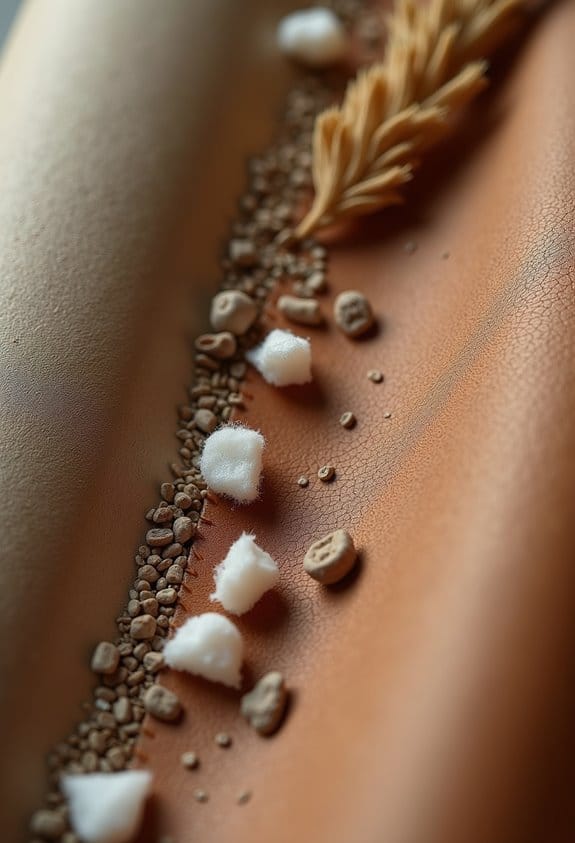
Why does faux leather remain a hot topic beyond just carbon numbers? While leather alternatives like vegan leather avoid animal welfare concerns tied to traditional leather, they bring their own ethical puzzles. Many faux leathers use fossil fuels and toxic chemicals, leading to microplastic pollution that threatens marine ecosystems—yikes! Despite a smaller carbon footprint, their non-biodegradable nature contributes to landfill issues and long-term environmental degradation. Ethical discussions must stretch further than animal rights, considering sustainability through the lens of synthetic material reliance. So, is choosing faux leather clear-cut? Not quite. It’s a balancing act where climate impact mingles with plastic waste risk, reminding us that in the quest for greener options, a deeper look beyond just carbon is always worth the effort (and the conversation). Exploring sustainable material choices—like organic cotton, recycled plastics, and water-based adhesives—offers promising alternatives that address both environmental and ethical concerns.
Comparing Resource Use: Real Leather vs. Faux Leather
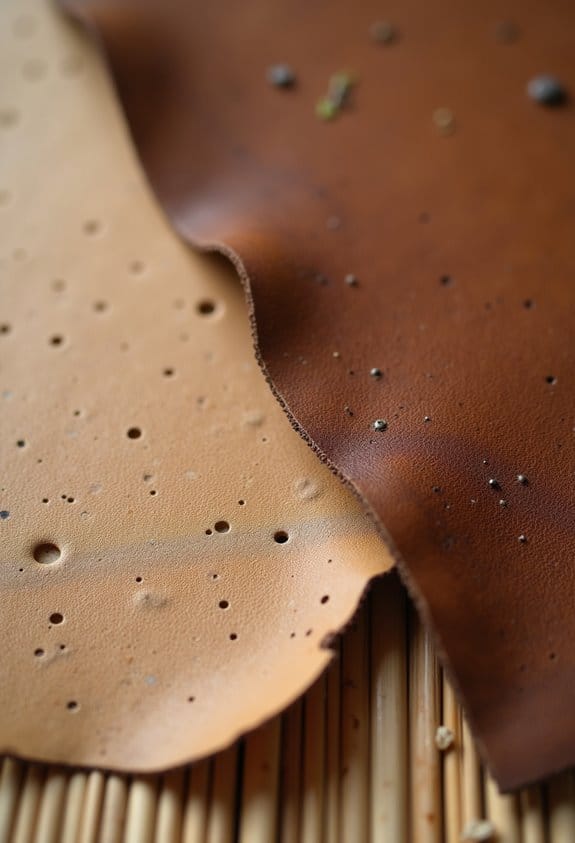
When it comes to resource use, comparing real leather and faux leather reveals some surprising contrasts. Real leather, derived from animal products, demands vast resources; cattle ranching drives deforestation and heavy carbon emissions, while the tanning process consumes tons of toxic chemicals and water—impressive, if not exactly sustainable. Faux leather typically boasts a smaller carbon footprint (15.8 kg CO2e per square meter) compared to the hefty 110 kg of real leather but brings its own issues, like microplastic pollution thanks to PU and PVC materials (not exactly ocean-friendly). Yet, not all faux leathers are created equal! Plant-based vegan leather, crafted from agricultural leftovers, requires far less water and land, offering a promising, more sustainable alternative. So, is faux leather always worse for the planet? The numbers suggest it’s not that simple! Additionally, choosing shoes made with eco-friendly manufacturing practices can significantly reduce the overall environmental impact of synthetic leather products.
Innovations in Sustainable Vegan Leather Alternatives
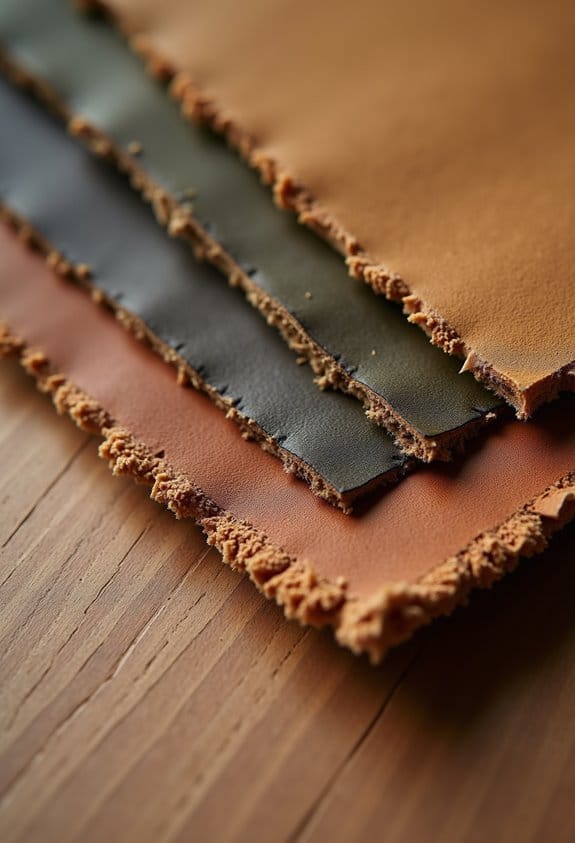
As the fashion world seeks greener options, innovations in sustainable vegan leather alternatives are taking center stage—and they’re pretty impressive! Piñatex, crafted from pineapple leaf fibers, turns agricultural byproducts into biodegradable, eco-friendly materials (no pineapple sacrifice here). Then there’s Mycelium leather, made from fungi roots, promising full biodegradability and cutting plastic use. Apple leather uses juicing waste, reducing food waste while being partly biodegradable. Cactus leather, known as Desserto, requires minimal water and zero pesticides—nature’s desert marvel. Grape leather, sourced from wine leftovers, cleverly repurposes agricultural scraps into stylish, sustainable products. These alternatives showcase how creativity in using agricultural byproducts leads to more sustainable, biodegradable materials, challenging old notions about faux leather’s environmental cost. Who knew waste could look so good? Additionally, choosing materials with natural moisture-wicking properties helps maintain comfort and foot health while reducing reliance on synthetic treatments.
Making Informed Choices for Long-Term Environmental Impact

Although faux leather often earns praise as an eco-friendlier choice, the truth isn’t always black and white. Vegan leather’s environmental impact varies widely, depending on production processes and material sources. Traditional animal leather boasts a hefty carbon footprint—110 kg CO2e per square meter—while synthetic options can be as low as 15.8 kg CO2e. But many faux leathers, made from PVC or PU, rely on fossil fuels and release microplastics, raising sustainability questions. Some newer, eco-friendly vegan leathers—think Piñatex or mycelium—use agricultural waste and are biodegradable, appealing to sustainable buyers. So, should one always choose vegan leather? Lifecycle assessments and transparency matter! Understanding the full picture (not just cute marketing labels) helps make informed, sustainable choices that truly lessen long-term environmental impact. Apple leather, made from apple waste pulp, offers a promising sustainable alternative that combines biodegradability with durability.
Frequently Asked Questions
What Are the Negative Effects of Faux Leather?
Faux leather production harms the environment through chemical emissions and high resource consumption. Recycling challenges and durability concerns persist, while consumer perception favors sustainable alternatives, biodegradable options, and wildlife conservation efforts to mitigate faux leather’s environmental impact.
What Is the Most Environmentally Friendly Leather?
The most environmentally friendly leather often involves sustainable materials like biodegradable options, vegan alternatives, or recycled leather, which lower the carbon footprint. Eco friendly tanning, animal welfare, production processes, longevity comparison, and consumer choices also shape this assessment.
Is Faux Leather Low Quality?
Faux leather quality varies; durability concerns often arise from cheaper synthetic materials. Ethical fashion and animal rights emphasize eco-friendly production processes. Consumer perceptions differ, but cost comparison and style versatility show that faux leather can rival real leather’s environmental impact and longevity.
What Is the Life Expectancy of Faux Leather?
Faux leather’s lifespan, meant to last 2 to 10 years, hinges on production processes, maintenance practices, and material innovations. Despite biodegradability concerns, sustainability initiatives and recycling options reshape consumer perceptions in alternatives comparison and lifecycle assessments.