As an Amazon Associate, we earn from qualifying purchases. Some links on this site are affiliate links at no extra cost to you. Our recommendations are based on thorough research and editorial judgment.

How to Store Vegan Leather Shoes to Prevent Cracking

Vegan leather shoes are delicate—they lack natural oils, so improper storage can cause cracking. To keep them happy, store in cool, dry spots away from harsh sunlight. Use breathable cotton bags (bye-bye mildew!) and cedar shoe trees that absorb moisture and preserve shape. Avoid overcrowding, and don’t let humidity throw a party for mold or stiffness. Regular shoe rotation? Absolutely! Curious about the best cleaning hacks or perfect storage setups? There’s plenty more to explore!
Key Takeaways
- Store vegan leather shoes in a cool, dry place away from direct sunlight and heat sources to prevent brittleness and cracking.
- Use breathable dust bags or cotton/canvas shoe bags to allow air circulation and avoid moisture buildup.
- Insert cedar wood or padded shoe trees to maintain shape and absorb moisture, preventing cracks and deformation.
- Avoid overcrowding and stack shoes properly to maintain their shape and prevent material stress.
- Regularly rotate shoes and inspect for early signs of damage to ensure even wear and timely maintenance.
Understanding Vegan Leather and Its Vulnerabilities
You may be interested

Although vegan leather is a popular and ethical alternative to animal hides, it has its own unique quirks that demand attention. Unlike traditional leather, vegan leather lacks natural oils, making it vulnerable to cracking and damage without proper care. So, how does one maintain these synthetic beauties? Essential care instructions include avoiding direct heat sources such as sunlight or radiators, because excessive heat dries out vegan leather, turning it brittle. Moisture is another foe—too much promotes mold and material breakdown if shoes aren’t stored in a cool, dry spot. Proper maintenance means letting the shoes air dry naturally if damp and using breathable dust bags to keep dust out while allowing moisture to escape. Want to keep your shoes in great shape? Regular care and a little attention go a long way! Choosing vegan leather shoes made with high-quality materials can also improve durability and resistance to damage.
Importance of Proper Storage for Vegan Leather Shoes
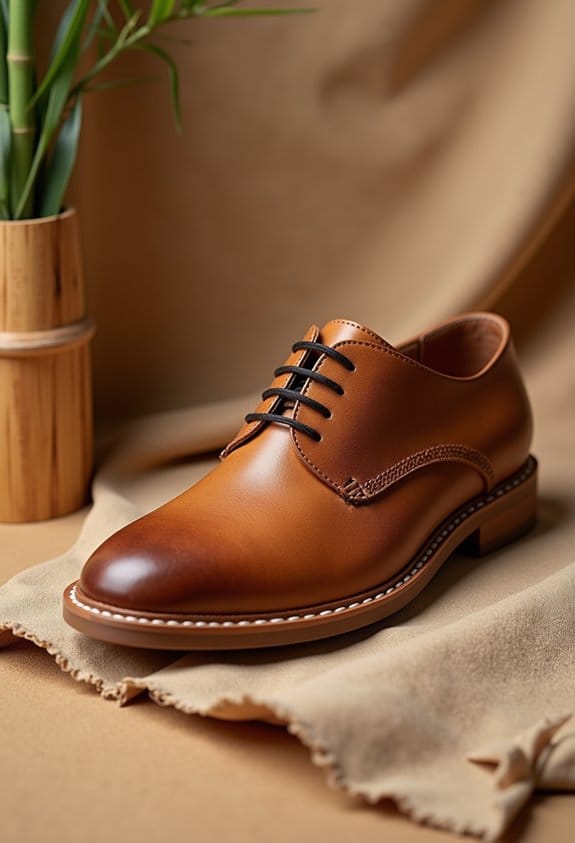
Since vegan leather shoes require a bit more TLC than their traditional counterparts, proper storage isn’t just a nice idea—it’s essential. To maintain their look and prevent cracking, it’s best to store them in a cool, dry place away from harsh sunlight. Ever wondered why your shoes lose shape or suddenly crack? It’s often due to poor care! Using dust bags (breathable, not plastic, please) helps air circulate, avoiding dampness and mildew. Shoe trees or acid-free paper stuffing work wonders to keep shoes in shape, preventing creases that lead to cracks. Plus, regularly rotating your shoes distributes wear evenly—no favorite child treatment here. Could proper storage be the secret to shoe longevity? Absolutely. Taking these simple steps shows vegan leather some love and delivers durable, stylish footwear for years ahead. Choosing shoes made with sustainable materials can further enhance their durability and environmental benefits.
Cleaning Vegan Leather Shoes Before Storage
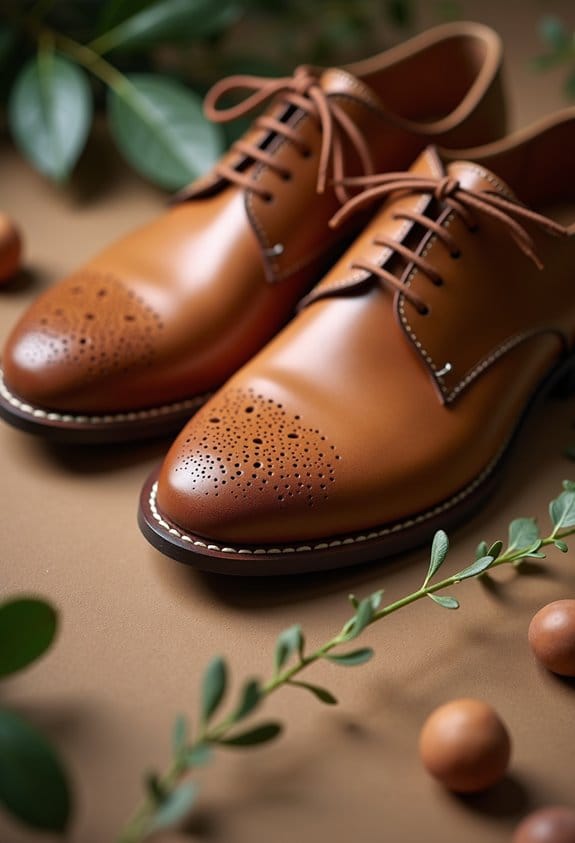
Proper storage certainly helps extend the life of vegan leather shoes, but what about preparing them first? Cleaning these shoes carefully with a soft brush or damp cloth removes dirt and grime that may cause cracking. For tougher stains, a mild detergent diluted in water does the trick—gently scrub to avoid scuffing. Once clean, let the shoes air dry naturally, ideally for 24 hours, steering clear of direct heat that could warp or dry the material. Before storing, why not treat them to a vegan leather conditioner infused with natural oils? This keeps the material supple and less prone to dryness. Don’t forget laces and hardware—they deserve a quick clean and dry too; after all, no one wants rusty buckles ruining shoe day later! Additionally, ensuring the shoes have proper breathability and ventilation before storage can help prevent moisture buildup that contributes to material degradation.
Choosing the Right Shoe Trees for Shape Maintenance
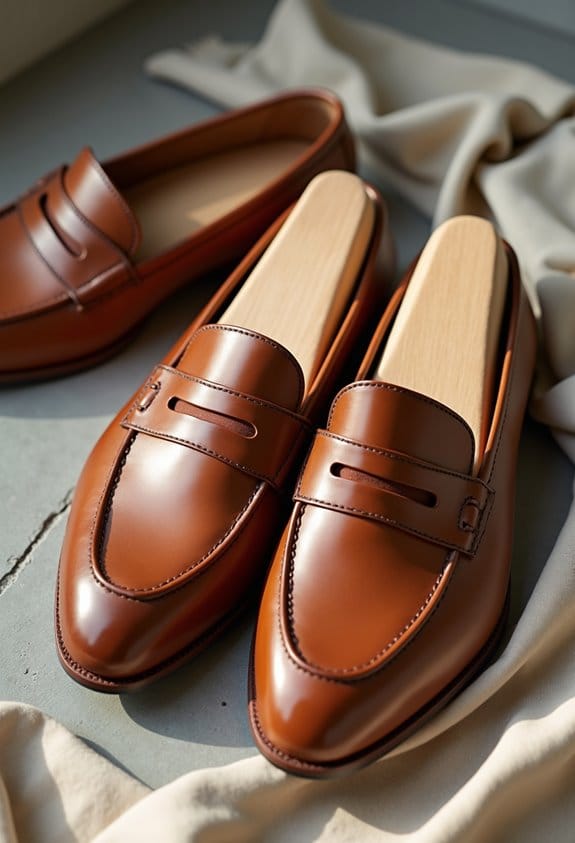
Choosing the right shoe trees can make a surprising difference in keeping vegan leather shoes looking sharp and fresh over time. Opting for cedar wood shoe trees isn’t just about shape maintenance; they also absorb moisture and odors, which helps prevent cracking. Adjustable shoe trees that fit snugly—about half a size larger than the shoes—offer ideal support without overstretching the vegan leather. Padded or contoured varieties apply gentle pressure, preserving the shoe’s form without annoying creases (because nobody wants crinkled shoes). Remember to store these trusty helpers in a cool, dry place away from direct sunlight, ensuring they don’t warp or lose shape when not in use. After all, maintaining your shoe’s shape means they’ll stay ready for the next adventure—or just a casual stroll downtown! Proper care also extends the shoe’s lifespan, which aligns with the durability goals of sustainable fashion.
Using Breathable Shoe Bags to Protect From Dust and Moisture
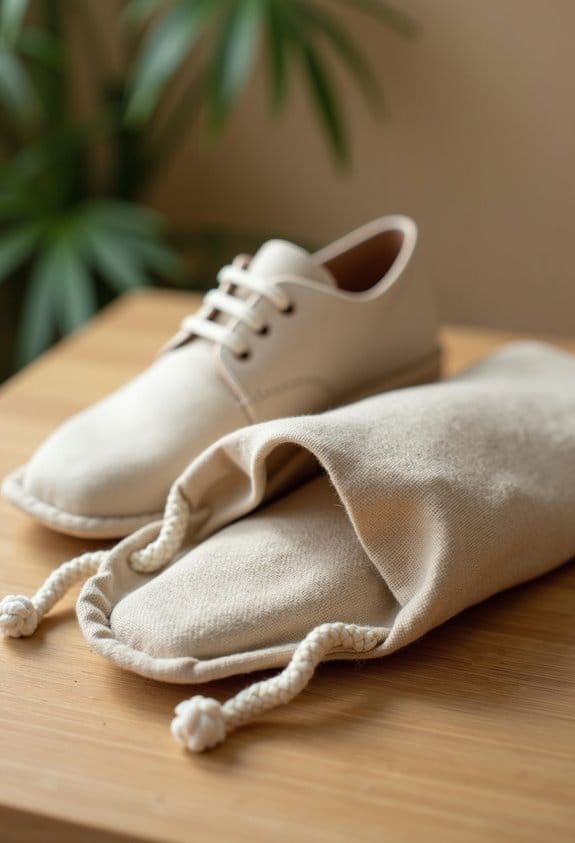
After getting the perfect shoe trees snug inside vegan leather shoes, the next step is guarding them against dust and moisture. Breathable shoe bags made from cotton or canvas are excellent choices; they protect from dust while allowing airflow, preventing moisture buildup that could cause cracking. Synthetic bags might trap dampness—no thank you! Size matters too: bags should fit comfortably without squashing shoes to maintain their shape and avoid creases. Silica gel packets work wonders inside these bags, quietly absorbing excess moisture. Regularly inspect stored shoes for signs of moisture or wear, and don’t forget to clean and condition them from time to time. This thoughtful care routine boosts the longevity of vegan leather shoes, keeping them looking fresh and crack-free, ready for their next adventure! Additionally, using breathable bags aligns with recommendations for maintaining durability and performance in vegan footwear by ensuring proper air circulation.
Ideal Storage Environment: Temperature and Humidity Considerations
While vegan leather shoes might not demand a climate-controlled vault, they do appreciate living in a cozy zone between 60°F and 75°F, where neither heat nor chill can sneakily cause cracks or material breakdown. Maintaining humidity around 30-50% in the storage environment is just as essential—too much moisture invites mold and deterioration, too little can dry the material out. Careful airing prevents trapped dampness, so breathable dust bags or ventilated boxes work wonders by balancing protection with fresh air circulation. Regular checks for temperature swings and suspicious damp spots in your storage area act as early alarms, helping prevent costly cracking. After all, isn’t keeping vegan leather happy worth a little attention? Proper temperature and humidity control make a noticeable difference in long-lasting, crack-free vegan leather footwear. Additionally, selecting footwear made from durable synthetic materials can further extend the lifespan of your vegan leather shoes by resisting wear and tear during storage and use.
Avoiding Common Storage Mistakes That Cause Cracking
Though vegan leather shoes might seem low-maintenance, improper storage can sneakily cause cracks and other damage that sneaks up on unsuspecting owners. Many storage mistakes are easy to avoid! For instance, piling shoes on top of one another or placing heavy things on them risks deforming their shape—and that invites cracking later. Also, it’s important to store shoes in breathable dust bags or well-ventilated boxes to prevent moisture buildup, which hastens wear. Neglecting to maintain the shoe’s shape, like skipping shoe trees, leads to creases turning into unsightly cracks. While inspecting and rotating shoes regularly is key, avoiding these common slip-ups when you store your collection goes a long way toward keeping those vegan leather shoes looking fresh and crack-free. Who knew storage could be such a game-changer? Additionally, choosing breathable materials for storage helps maintain the shoes’ moisture balance and preserves their quality over time.
Tips for Rotating and Regularly Inspecting Vegan Leather Shoes
Rotating vegan leather shoes every few days is a simple trick that can work wonders for their lifespan. By rotating, wear and tear on a single pair is minimized, helping to maintain their shape and prevent premature cracking. It’s also crucial to regularly inspect shoes for any early signs of damage—like cracks, discoloration, or dirt buildup on soles—which can affect both appearance and durability. A dedicated storage area with good airflow reduces moisture accumulation, a sneaky culprit behind cracking. Keeping a shoe diary to track usage and care routines might sound (a bit) over-the-top but really helps guarantee each pair gets the attention they deserve. After all, don’t your shoes deserve a little love for all the ground they cover? Additionally, using gentle cleaners designed for vegan fabrics can help maintain the shoe’s softness and prevent material damage over time.
Frequently Asked Questions
How Do You Keep Vegan Leather From Cracking?
Over 60% of vegan leather products fail prematurely due to poor care. Effective vegan leather care involves proper storage, moisture control, avoiding heat, cleaning techniques, understanding quality comparisons, durability tips, and avoiding common mistakes to prevent cracking.
How to Protect Vegan Leather Shoes?
To protect vegan leather shoes, one should apply regular shoe maintenance, including cleaning tips and moisture control. Employ storage solutions ensuring temperature regulation, prevent scuffs, and focus on long-term care to maintain durability and appearance effectively.
How to Preserve Fake Leather Shoes?
Preserving fake leather shoes involves proper shoe storage with ventilation, moisture control, and temperature regulation. UV protection and thorough cleaning methods prevent damage. Utilizing boxing options, incorporating seasonal care, and ensuring adequate airflow maintain the shoes’ longevity and appearance.
How Long Will Vegan Leather Shoes Last?
Vegan leather lifespan typically ranges from 3 to 5 years, influenced by durability factors such as environmental impact, wear patterns, and brand differences. Effective maintenance tips, style choices, and cost comparison also affect overall shoe longevity.