As an Amazon Associate, we earn from qualifying purchases. Some links on this site are affiliate links at no extra cost to you. Our recommendations are based on thorough research and editorial judgment.


Is Cactus Leather Good for Shoes? What to Expect Over Time

Cactus leather makes surprisingly durable shoes, lasting 5 to 10 years with basic care—think gentle cleaning and plant-based conditioners. It’s breathable and lightweight, perfect for warmer weather, yet not fully waterproof (heavy rain might cramp its style). This eco-friendly alternative requires less water, supports sustainability, and fights carbon dioxide, all while offering that classy leather look without animal harm. Curious how it stacks up against traditional leather and care tips? There’s more to uncover.
Key Takeaways
- Cactus leather is durable and breathable, providing comfort and resistance to everyday wear for shoes.
- Shoes made from cactus leather can last 5 to 10 years with proper care and maintenance.
- The material is water-resistant but not waterproof, so avoid heavy moisture exposure.
- Minor creases and scuffs may develop over time but do not affect the material’s integrity.
- Regular cleaning and plant-based conditioners help maintain softness, durability, and resistance to scuffs.
What Is Cactus Leather?
You may be interested


Cactus leather, a clever twist on traditional materials, is made from the leaves of the nopal cactus—yes, that spiky fellow lounging in desert landscapes. This plant-based leather offers an environmentally friendly, sustainable alternative to traditional animal leather. Produced sustainably by harvesting mature cactus leaves without harming the plant, cactus leather is both durable material and biodegradable. Introduced by Desserto in 2019, it combines softness and strength, mimicking real leather’s texture while being eco-conscious. Plus, it’s breathable, making it handy for footwear in warmer climates. So, why not choose a material that’s tough, earth-friendly, and plant-derived? Cactus leather proves one can enjoy durability and sustainability together—who knew desert plants could be so fashionable and functional? It also involves sustainable harvesting practices that support local farmers and reduce environmental impact.
The Durability of Cactus Leather Shoes

When choosing footwear, durability ranks high on the list—after all, no one wants shoes that fall apart after a few wears. Cactus leather offers solid durability, lasting between 5 to 10 years with proper care and maintenance. Though it’s not as tough as premium animal leather, cactus leather resists abrasion and tearing well enough for everyday use. Water-resistant but not waterproof, it needs protection from heavy moisture to avoid premature wear and tear. Regular cleaning with a damp cloth and avoiding harsh chemicals help keep cactus leather looking sharp. Over time, minor creasing or scuffs may appear, but shouldn’t alarm wearers. So, can cactus leather handle daily adventures? With just a bit of care, it’s a surprisingly sturdy companion for those seeking sustainable footwear!
How Breathable Is Cactus Leather?

How does footwear stay cool and comfy on a hot day? Cactus leather, with its porous structure, steps up where traditional leather can struggle. Its breathability allows air to circulate, reducing moisture retention and keeping feet drier—no sweaty sock surprises! This material’s natural temperature-regulating properties help prevent excessive heat buildup inside shoes, making it a smart choice for warm climates. Despite its breathability, cactus leather remains impressively durable, resisting wear without sacrificing comfort. Sustainable fashion brands love it, incorporating cactus leather into their footwear collections to promote a healthy environment while delivering breathable, stylish shoes. So, can cactus leather cool your feet effortlessly? It appears so—offering a combination of comfort, durability, and eco-friendliness that traditional leather can only aspire to emulate. Additionally, like apple leather, cactus leather can benefit from sustainable maintenance practices to extend its lifespan and performance.
Water Resistance and Care Tips

Although it isn’t fully waterproof, this innovative leather’s water resistance is impressively practical thanks to a bio-based polyurethane coating that guards against light rain and spills. Still, excessive moisture isn’t cactus leather’s best friend. So, how should one clean these shoes? A simple damp cloth usually does the trick—no harsh chemicals required (because why invite trouble?). After getting wet, letting cactus leather shoes air dry naturally is essential; direct heat only risks cracking or warping. To keep that supple feel going strong, applying a plant-based conditioner is a smart move. Regular maintenance, including proper storage away from humidity, boosts the durability of cactus leather footwear. With some care, these shoes can withstand everyday adventures—ready to impress without high-maintenance drama! Additionally, choosing materials like cactus leather supports sustainable practices similar to those found in hemp shoe production, which reduces environmental impact through eco-friendly processes.
Environmental Benefits of Cactus Leather Footwear
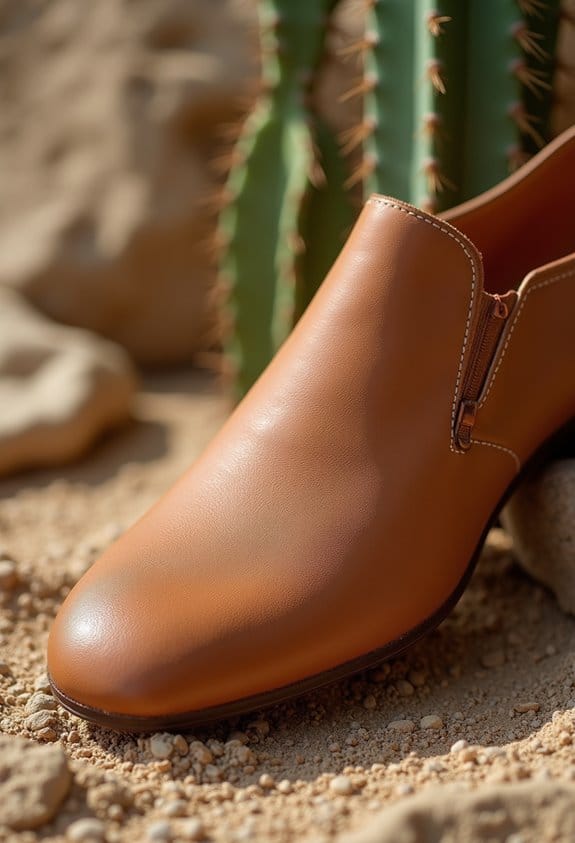
Countless environmentally conscious consumers are stepping up their shoe game with cactus leather footwear, and it’s easy to see why. Cactus leather offers impressive environmental benefits as a sustainable solution crafted from nopal cactus leaves, which require minimal water—far less than traditional leather production. Not only is it a biodegradable material, breaking down naturally and reducing landfill waste, but its cultivation also supports carbon sequestration, with each plant soaking up significant CO2. Add to that the production process’s lower greenhouse gas emissions and the ethical consumerism appeal of cruelty-free, pesticide-free sourcing. So, why settle for old-school leather drama when cactus leather shoes bring style, planet care, and a touch of prickly charm—all wrapped up in one eco-friendly package? Like mushroom leather, cactus leather provides an innovative, sustainable alternative to traditional leather, combining durability with environmental responsibility through its biodegradable properties.
Comparing Cactus Leather to Traditional Leather
Beyond the environmental perks, comparing cactus leather to traditional leather reveals interesting trade-offs worth considering. Cactus leather, made from nopal cactus leaves, boasts natural breathability and lightweight comfort—ideal for warm weather. Traditional leather, however, can last for decades, developing a charming patina, while cactus leather’s durability ranges from 5 to 10 years. It’s biodegradable and uses far less water, making it an ethical alternative to animal-based traditional leather. But beware: cactus leather tends to suffer more from liquid damage, unlike its naturally water-resistant traditional counterpart. So, while cactus leather offers a fresh, sustainable choice with great breathability, those seeking long-lasting shoes with classic durability might still lean toward traditional leather. Wouldn’t you agree it’s a classic versus cactus showdown? Additionally, for footwear, look for soles made from recycled materials to enhance durability and eco-friendliness.
Price Considerations for Cactus Leather Shoes
Cactus leather shoes often come with price tags ranging from $100 to $300, placing them above typical synthetic leather options but within reach for many eco-conscious shoppers. Is the higher price worth it? The answer lies partly in the eco-friendly production and biodegradable nature of cactus leather, which appeals strongly to sustainable fashion enthusiasts. While the price of cactus leather might seem steep now, growing consumer demand could drive costs down as mass production improves. These shoes are more than just a trend—they’re an investment. Offering durability comparable to traditional leather, they can last 5 to 10 years when properly cared for. So, paying more upfront might just save you (and the planet) in the long run—giving synthetic materials a run for their money! Additionally, cactus leather sneakers provide moisture-wicking properties that make them comfortable for daily wear.
Maintaining and Extending the Life of Cactus Leather Shoes
Every shoe lover knows that keeping footwear in top shape takes a bit of care, and cactus leather shoes are no exception. To maintain their fresh look, regularly clean cactus leather with a damp cloth and mild soap—just steer clear of harsh chemicals that could throw a wrench in the material’s integrity. After a rain shower, simply air dry the shoes away from direct heat; no hairdryers allowed! Using a plant-based leather conditioner every now and then helps keep the material soft and boosts durability, preventing dryness and cracks. Want extra protection? Apply a protective spray made for plant-based leather to enhance water resistance and guard against scuffs. Storing them in a cool, dry spot is the final trick to extend these eco-friendly kicks’ lifespan. Who knew maintaining cactus leather could be this straightforward? Additionally, choosing materials like vegan leather with water-repellent finishes can further improve the shoes’ durability over time.
Frequently Asked Questions
How Long Does Cactus Leather Last?
Cactus leather lasts approximately 5 to 10 years, influenced by durability factors and maintenance tips. Its sustainability benefits and lower environmental impact appeal to consumer preferences, while texture comparison and production process support cost comparison within evolving fashion trends.
What Are the Disadvantages of Cactus Leather?
“A stitch in time saves nine” highlights cactus leather’s sustainability concerns, durability issues, limited water resistance, and higher maintenance requirements. Its environmental impact contrasts with cost comparisons, affecting consumer perception, fashion trends, and ethical considerations amid evolving preferences.
Is Cactus Leather as Good as Real Leather?
Cactus leather offers a sustainable fashion alternative with lower environmental impact and fewer ethical concerns. Despite texture differences and varied color options, its durability comparison to real leather is lower, influencing market trends and consumer demand; maintenance tips improve longevity.
How to Protect Cactus Leather?
To protect cactus leather, proper cactus leather care includes avoiding excess moisture, using gentle cleaning techniques, and applying plant-based conditioners. Its durability factors, moisture resistance, and sustainable production methods highlight environmental benefits, aligning with vegan alternatives and current fashion trends.