As an Amazon Associate, we earn from qualifying purchases. Some links on this site are affiliate links at no extra cost to you. Our recommendations are based on thorough research and editorial judgment.


When “Vegan” Isn’t “Green”: The Tradeoffs in Shoe Materials

Not all vegan shoes are planet-friendly—45% rely on polyurethane (PU), and 20% on PVC, plastics that can hang around the environment for centuries (talk about long-term commitments!). Even “plant-based” options often sneak in plastic for durability, confusing consumers. So, going animal-free doesn’t always mean green! Yet, some brands offer truly eco-smart choices like mycelium or apple leather, blending ethics and environment without the plastic baggage. Curious about how to spot the real deal? Keep exploring to find out.
Key Takeaways
- Most vegan leathers contain plastics like PU (45%) and PVC (20%), which are non-biodegradable and environmentally harmful.
- Plant-based alternatives comprise about 35% of vegan leathers but may still include up to 30% plastic for durability.
- Greenwashing leads to consumer confusion, with 74% unaware that “vegan” often means plastic-based, not truly eco-friendly materials.
- True sustainability requires transparent labeling, certifications (e.g., GOTS, Fair Trade), and avoidance of plastic blends in shoe materials.
- Circular design and regulatory measures promote recycling, durability, and truthful green marketing for genuinely sustainable vegan footwear.
Understanding Vegan Leather Materials
You may be interested


Although vegan leather is often hailed as a greener choice, it’s not as simple as it seems. Around 45% of vegan leather contains polyurethane (PU), and 20% uses polyvinyl chloride (PVC), both synthetic plastics that challenge environmental impact claims due to their non-biodegradable nature. Materials science is catching up though—innovative plant-based alternatives, like mycelium (fungi leather) and fruit leather from byproducts, make up roughly 35% of offerings, showing promise for sustainability. But wait—should consumers trust those “plant-based” marketing claims? Not always. Some “plant-based” labels cleverly mask plastic components, stirring confusion. Meanwhile, leaders like Allbirds are championing truly eco-friendly options, with products free from fossil fuels. So, while vegan leather can be greener, it’s a mixed bag worth unpacking carefully! When considering vegan leather for footwear, the use of synthetic materials like PU leather is common for durability and style in vegan combat boots.
The Environmental Impact of Plastic-Based Alternatives
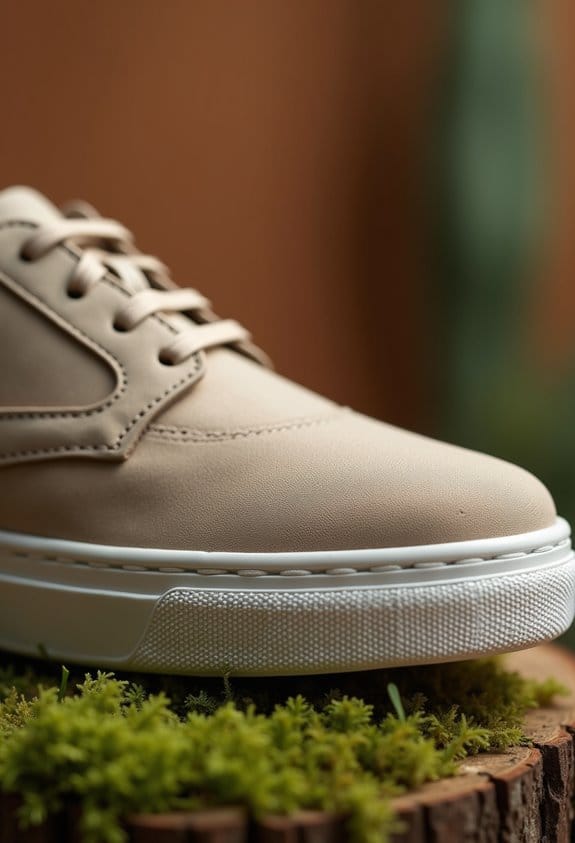
Vegan leather’s push for sustainability sounds promising, but what about the plastic-based options many brands rely on? Plastic-based alternatives like polyurethane (PU) and polyvinyl chloride (PVC) come from fossil fuels, meaning their environmental footprint is no joke. PU, making up about 45% of vegan leathers, can linger in the environment for centuries, while PVC fundamentally never decomposes—talk about an unwanted guest! Adding to the mess, these materials shed microplastics, which sneak into water and soil, causing real harm. Some brands blend agricultural waste with plastics, muddying the “natural materials” waters and raising questions about greenhouse gas emissions over the product’s life. So, is plastic-based vegan leather really greener, or just a clever marketing trick dressed in eco-friendly clothes? The answer isn’t as clear as it seems! Choosing products made from recycled ocean plastics presents a more responsible alternative by reducing the demand for new plastic production and supporting ocean cleanup efforts.
The Role of Greenwashing in Vegan Leather Marketing

How honest are the claims behind the trendy “vegan leather” label? Quite often, greenwashing clouds the true story. Many so-called vegan materials hide hefty amounts of plastic—about 45% polyurethane and 20% PVC—both notorious for harsh environmental footprints. Even plant-based alternatives like grapes or mushrooms usually sneak in up to 30% plastic for durability. Brands wave the “vegan” flag proudly, yet their vague “eco-friendly” claims mask long-lasting materials that take centuries to break down. Is this really green? Consumers, confused by this mix of minor eco initiatives and hefty plastic use, might feel misled. In this booming $89.6 billion industry, greenwashing blurs lines between genuinely sustainable alternatives and marketing spin, challenging anyone who wants to shop green without guesswork or guilt. Apple leather, made from leftover apple peels and cores combined with non-toxic binders, offers a more eco-friendly material alternative that significantly reduces environmental impact compared to traditional leather.
Distinguishing Between Animal-Free and Planet-Friendly Products
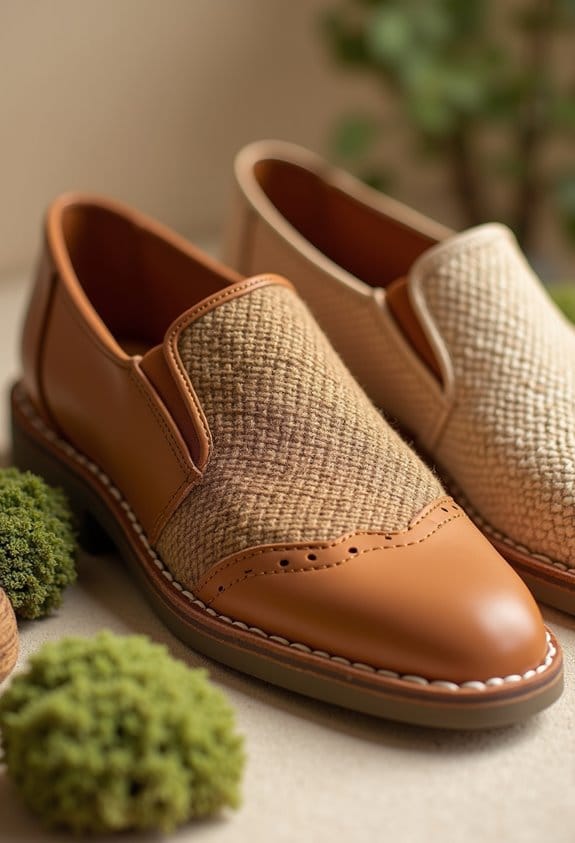
What exactly sets apart animal-free from planet-friendly shoe materials? Many leather alternatives labeled as vegan are actually plastic-based, like polyurethane and PVC, which can linger in landfills for centuries despite avoiding animal products. Surprisingly, 74% of consumers don’t realize vegan often means plastic-based, not necessarily sustainable. This confusion matters because a vegan shoe isn’t automatically eco-friendly—transparency in labeling is key! Some newer options, such as mycelium or grape leather, edge closer to sustainability but may still mix in plastics for durability. So, asking “Is this vegan, or truly planet-friendly?” becomes essential. Without clear information, shoppers might proudly sport shoes free of animal cruelty but overlook the bigger environmental impact. Understanding these distinctions helps consumers make truly sustainable choices, beyond the trendy “vegan” badge. Considering biodegradable materials like organic cotton and biodegradable foams can further reduce environmental harm compared to conventional vegan leather alternatives.
Innovations in Sustainable Shoe Materials

When searching for truly sustainable shoe materials, the fashion world is stepping up with some inventive (and downright cool) new options. Mirum, a natural material by Allbirds, offers a leather alternative free from fossil fuels—quite a refreshing change! Mushroom-based materials like Mylo are moving from research and development labs to actual shoes, with brands like Stella McCartney embracing this innovation. Balenciaga’s Ephea outerwear further shows biomaterials’ growing role in fashion. But are these alternatives to animal-based leather always as green as they seem? With products like Pangaia’s Grape Leather Sneakers containing nearly 30% plastic, things get complex. Still, the surge in these eco-friendly materials marks exciting progress, even if mycelium products are still rare in stores.
Challenges in Labeling and Transparency for Consumers
Although vegan leather products are often hailed as eco-friendly alternatives to animal leather, their true environmental impact can be surprisingly complex. Many of these materials are made with plastics like polyurethane, camouflaging the fact that they resemble regular plastic behind a “vegan” label. Misleading marketing blurs the lines, making shoppers wonder if “plant-based” always means green—isn’t it ironic? Without strict transparency and clear labeling regulations, consumers struggle to assess what’s really inside their shoes. Blends of agricultural waste and plastic complicate recycling, further muddying sustainability claims. So, can customers truly trust the buzzwords on shoe boxes? Until brands adopt standardized definitions and reveal detailed material info, the environmental impact remains a guessing game—proof that “vegan” doesn’t automatically equal “green.” Incorporating certifications like GOTS and Fair Trade can help provide clearer insight into the sustainability and ethics behind shoe materials.
The Tradeoffs Between Durability and Sustainability
While the promise of eco-friendly shoes is exciting, the tradeoff between durability and sustainability is a tricky balancing act. Genuine leather, often certified by the Leather Working Group for responsible sourcing, can last over 30 years, reducing carbon footprint through its longevity. In contrast, many vegan leathers, mostly plastic-based, fail within 2 to 5 years, raising concerns about environmental impact and waste. Material innovation like mushroom leather shows hope but still lags in durability. Does a shoe that wears out quickly really help the planet? Additionally, synthetic vegan options can take centuries to biodegrade, unlike natural leather which decomposes more readily. Consumers seeking green kicks must weigh whether durability or trendy veganism better serves sustainability—both matter, but one often outstrips the other in this complex eco-footprint equation. Mushroom leather sneakers, made from mycelium, offer better water and stain resistance while being biodegradable, representing a promising middle ground in sustainable footwear.
How Regulatory Measures Address Greenwashing Claims
Eco-friendly shoe claims can sometimes sound too good to be true—so who’s keeping the marketers honest? Regulatory measures step in to fight greenwashing by ensuring environmental claims are truthful and backed by proof. In the U.S., the Federal Trade Commission’s Green Guides help companies market sustainable products without exaggeration. Across the pond, the UK’s Consumer Protection Regulations and the EU Ecolabel enforce similar rules, making sure eco-friendly labels aren’t just fancy stickers. Consumers rely on trusted eco-certifications to spot genuine sustainability amid marketing hype. Legal actions against deceptive claims are increasing, signaling tougher accountability. These regulatory efforts encourage companies to prioritize real environmental benefits over marketing flash, helping shoppers step confidently into greener footwear choices (and avoid those “too good to be true” sneakers). Additionally, the use of vegan-certified materials in shoes supports transparency and aligns with consumer demands for ethical yet sustainable footwear.
Making Informed Choices in Sustainable Footwear
Choosing sustainable footwear can seem like a maze, but understanding key materials and practices helps make the path clearer. Not all faux leather is created equal; some contain plastics like polyurethane, which are harmful to the environment despite eco-friendly claims. Materials with vastly different environmental footprints, like sugarcane-based EVA foam or GOTS-certified cotton, offer genuinely greener alternatives worth considering. Purchasing decisions also benefit from examining brands’ circular design efforts—take-back programs and mono-material shoes make recycling easier, reducing waste. And who knew durability and repairability could save the planet (and your wallet)? Brands like Thousand Fell prove it’s possible. So, next time you shop sustainable footwear, ask: Is this choice truly kind to the Earth? Being informed beats greenwashing any day! Additionally, supporting brands with fair wages and safe workspaces helps promote ethical manufacturing practices across the industry.
Frequently Asked Questions
What Is the Most Eco-Friendly Shoe Material?
Like a forest reclaiming ruins, the most eco-friendly shoe materials are biodegradable materials, recycled textiles, organic cotton, natural rubber, and hemp fabrics, which harmonize sustainability by reducing waste, chemical use, and reliance on fossil fuels.
Are Vegan Shoes More Sustainable?
Vegan shoes are not inherently more sustainable; their durability varies widely. Biodegradable shoe materials and ethical sourcing practices improve outcomes, but thorough life cycle assessment is essential to evaluate vegan shoe brands accurately and their true environmental impact.
What Is the Downside of Vegan Leather?
The downside of vegan leather includes its reliance on synthetic materials, leading to environmental trade offs such as microplastic pollution, durability concerns causing frequent replacements, and production processes that may not reduce overall ecological impact despite being animal-free.
What Is the Difference Between Vegan and Non Vegan Shoes?
Vegan and non-vegan shoes are like two storytellers: one champions animal rights with synthetic tales, the other roots in natural narratives. Their production processes, material sourcing, consumer perceptions, and brand transparency shape differing ethical and environmental chapters.