As an Amazon Associate, we earn from qualifying purchases. Some links on this site are affiliate links at no extra cost to you. Our recommendations are based on thorough research and editorial judgment.


Sustainable Shoe Certifications and Labels (Explained Simply)

Sustainable shoe certifications help shoppers pick eco-friendly kicks without falling for greenwashing tricks. Labels like GOTS and OEKO-TEX guarantee organic fibers and toxin-free materials, while PETA Vegan Certification promises cruelty-free choices (no cows or bunnies harmed here). FSC verifies responsible sourcing, and Cradle to Cradle assesses recyclability. These badges shrink shoes’ environmental footprint and boost trust. Curious how ethical brands maintain fair labor and quality? There’s more to uncover beyond just the labels!
Key Takeaways
- GOTS certification ensures shoes use at least 70% organic fibers and no harmful chemicals.
- OEKO-TEX label verifies materials-free from toxic substances for safer footwear.
- PETA Vegan Certification guarantees shoes contain no animal products or byproducts.
- FSC certification confirms leather and rubber come from responsibly managed forests.
- Cradle to Cradle certification evaluates shoe recyclability and circular design features.
Why Sustainable Shoe Certifications Matter
You may be interested



Although choosing the right pair of shoes might seem like a simple task, sustainable shoe certifications play an essential role in guiding consumers toward eco-friendly options. These certifications guarantee brands deliver quality products that meet strict ethical and environmental impact standards, offering much-needed transparency. Eco-conscious consumers can easily spot labels like GOTS or PETA Vegan, which assure materials are free from harmful chemicals or animal-derived components—a true win for ethical fashion! Beyond just reassuring shoppers, certifications help combat greenwashing by holding brands accountable. With the sustainable footwear market valued at around USD 8 billion in 2022 and growing steadily, certifications motivate brands to maintain integrity while boosting consumer confidence. So, why guess when you can trust certified shoes to step lightly on the planet? The annual fair trade certification verification process ensures ongoing compliance with fair labor and environmental standards, providing further assurance to consumers.
Key Certifications for Eco-Friendly Footwear

Knowing why sustainable certifications matter sets the stage for understanding which labels truly make a difference. For eco-friendly footwear, certifications like GOTS guarantee shoes contain at least 70% organic fibers and are made without harmful chemicals—good for feet and the planet! OEKO-TEX guarantees materials free from toxic substances, making shoes safer to wear. Curious about cruelty-free options? PETA Vegan certification promises no animal products were harmed in shoe production. FSC guarantees leather or rubber comes from responsibly managed forests, supporting ethical practices. Finally, Cradle to Cradle assesses how recyclable and sustainable a shoe truly is, minimizing its environmental impact. These certifications spotlight sustainable materials and responsible methods, helping consumers step lightly on Earth—walk the walk, anyone? Many brands also focus on material sustainability by using recycled plastics and plant-based materials to further reduce environmental impact.
How to Identify Genuine Sustainable Labels
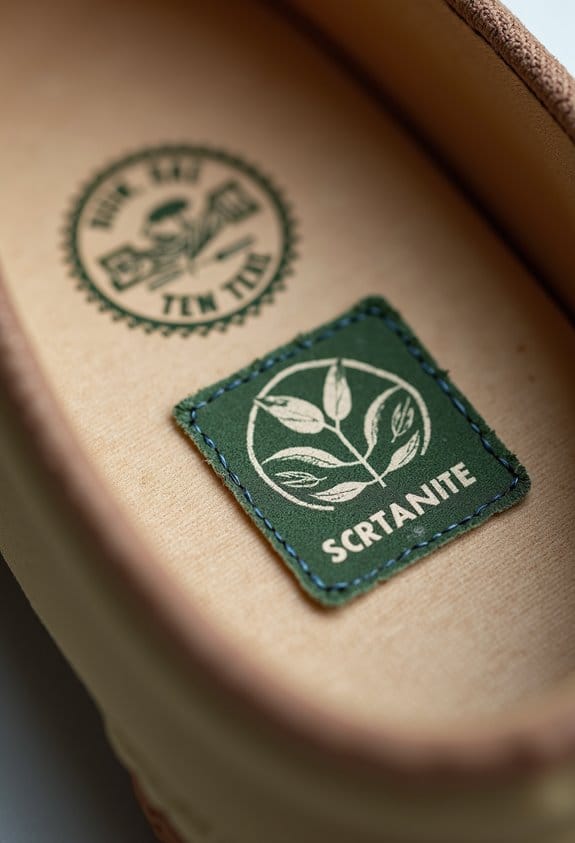
To spot truly sustainable shoe labels, one must learn to look beyond flashy logos and marketing buzzwords. Genuine certification labels like the Global Organic Textile Standard (GOTS) promise eco-friendly materials, free from harmful chemicals. Wondering if a shoe is animal-friendly? The PETA Vegan Certified label has that covered! For a broader view of sustainable practices, B Corporation certification proves a brand meets tough social and environmental standards. Shoes bearing the Forest Stewardship Council label guarantee leather and rubber come from responsibly managed forests—talk about reducing carbon footprints! Finally, Cradle to Cradle certification evaluates circular design, meaning shoes are built for reuse and recycling. So, when you spot these badges, you’re likely stepping into truly sustainable footwear. Who knew labels could be this enlightening? Many vegan shoes also highlight PETA-approved vegan certifications to ensure cruelty-free and eco-friendly manufacturing practices.
The Impact of Certified Sustainable Footwear

Certified sustainable footwear isn’t just a shiny badge—it actually makes a real-world difference. Through certification, sustainable footwear reduces environmental impact by using eco-friendly materials like organic cotton and recycled materials. Labels such as GOTS guarantee products are free from harmful chemicals, promoting safer shoes and ethical manufacturing practices. These efforts support a circular economy by encouraging recycling and lessening reliance on virgin resources. But does certification really matter to buyers? Absolutely! Consumer trust grows as certifications guarantee adherence to tough environmental and ethical standards. Did you know the sustainable footwear market is booming, expected to grow annually by 6.2% through 2030? This trend shows shoppers are stepping toward greener options, proving sustainable shoe certifications are more than just fancy labels—they’re a step in the right direction! Many leading brands also implement ethical manufacturing practices to ensure fair wages and safe workspaces throughout production.
Choosing Brands With Verified Ethical Practices

While the world of sustainable shoes can sometimes feel like decoding a secret language, shoppers aiming for truly ethical footwear have some reliable markers to guide them. Certification guarantees that footwear brands meet strict ethical standards, covering everything from eco-friendly products to fair trade labor conditions. Look for well-known labels like GOTS and OEKO-TEX, which confirm materials used meet organic and chemical-free criteria. B Corp certification signals top social and environmental performance, while FSC ensures responsible material sourcing. Curious about cruelty-free kicks? The PETA Vegan Certified label has you covered. For those who want transparency and brands that prioritize fair wages and safe working conditions, a little research reveals who’s stepping up. So, sustainable fashion isn’t just a trend—it’s a promise backed by verified ethical standards! Additionally, choosing footwear made with natural rubber and recycled materials further supports reducing environmental impact and promotes sustainable consumption.
Frequently Asked Questions
What Are Sustainability Labels?
Sustainability labels verify eco friendly brands’ commitment to ethical production, fair trade, and reduced carbon footprint through organic textiles, recycled materials, and transparent practices. They support conscious consumerism by countering greenwashing tactics in sustainable fashion’s environmental impact.
What Is a Sustainable Certification?
Seventy-five percent of consumers seek eco-friendly materials; a sustainable certification verifies adherence to sustainable practices, ethical manufacturing, and supply chain transparency, combating greenwashing tactics by enhancing consumer awareness of a brand’s social responsibility and environmental impact through rigorous certification processes.
What Are the Requirements for Footwear Labeling?
Label requirements mandate transparency measures regarding material sourcing, manufacturing processes, and environmental impact. They guarantee brand responsibility by disclosing eco-friendly standards, certification bodies, and ethical production, enhancing consumer awareness about footwear sustainability and compliance with industry regulations.
What Does It Mean When Nike Says Sustainable Materials?
When Nike claims sustainable materials, it signifies sustainable innovation through eco-friendly fabrics and recycled materials, emphasizing manufacturing processes that minimize carbon footprint, waste reduction, ethical sourcing, supply chain transparency, durability standards, and enhancing consumer awareness about environmental impact.


