As an Amazon Associate, we earn from qualifying purchases. Some links on this site are affiliate links at no extra cost to you. Our recommendations are based on thorough research and editorial judgment.

Recycled Vs Upcycled Materials in Shoes: What’s the Difference?

Recycled shoes start by melting plastics like old bottles into fibers, a process that saves 4,500 pounds of CO2 per ton but guzzles lots of energy—up to 20,000 megajoules! Upcycled footwear, on the other hand, cleverly repurposes worn-out sneakers or scraps with minimal fuss and way less energy, slashing emissions by up to 75%. Both cut landfill waste, but which one’s greener or trendier? Stick around to discover how brands make sustainability stylish.
Key Takeaways
- Recycled shoe materials come from processed post-consumer waste, involving energy-intensive mechanical recycling to create new fabrics or components.
- Upcycled shoe materials use discarded items creatively repurposed without heavy industrial processing, reducing energy consumption and emissions.
- Recycling saves landfill space and carbon emissions but requires more energy, while upcycling cuts emissions by up to 75% with less energy use.
- Upcycling promotes unique, stylish designs by reusing fabrics or leather scraps, appealing to sustainability-focused consumers.
- Both methods reduce waste and environmental impact, but upcycling generally offers greater energy and pollution reductions compared to recycling.
What Defines Recycled Materials in Footwear
You may be interested



Recycled materials in footwear are like a magic trick for the environment—turning old trash into trendy treasures! These materials mostly come from post-consumer waste, like plastic bottles and worn-out shoes, cleverly processed to create new raw ingredients for shoe production. Through mechanical recycling, plastics such as PET are broken down into fibers, which are then woven into fabrics used in footwear. This clever method lowers carbon emissions and saves resources by skipping the need to extract raw materials. With about 92 million tonnes of textile waste produced yearly, recycled materials in footwear play a helpful role in sustainable fashion, diverting waste from landfills. Brands champion this circular economy approach, proving that recycled shoes not only look good but also extend the lifecycle of materials. Who knew old trash could step into such a stylish role? Many recycled plastic sneakers even feature insoles infused with 15% algae foam to enhance comfort while maintaining eco-friendliness.
Understanding Upcycled Materials in Shoe Design
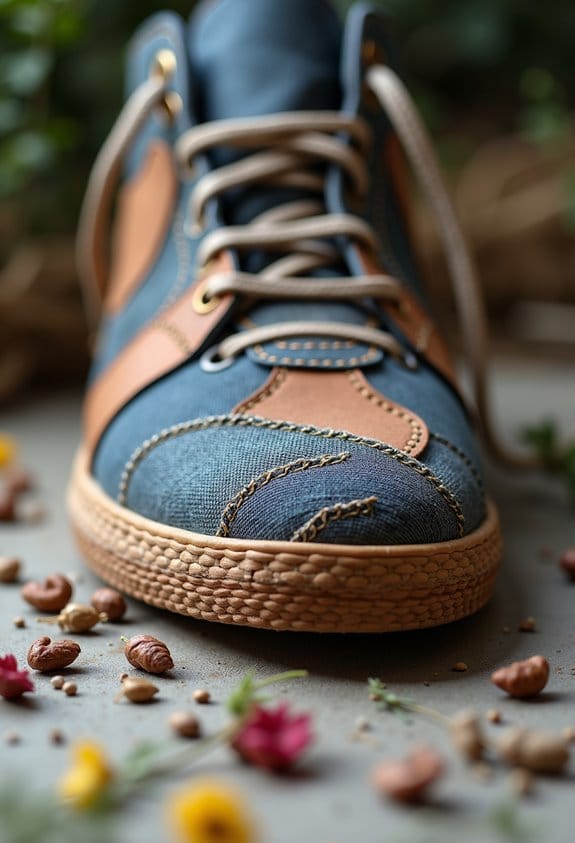
While recycling transforms waste into new materials, upcycling skips the factory reset by creatively repurposing existing items like discarded fabrics, leather scraps, or even old shoes into fresh, functional footwear. This clever process turns what might be trash into treasure, boosting value without heavy industrial work. Upcycling tackles waste head-on, turning what could clog landfills into unique, limited-edition kicks—talk about giving old shoes a second act! Brands such as Thousand Fell embrace this method, showing that upcycling isn’t just trendy but truly sustainable. By cutting the need for virgin materials and lowering carbon footprints, upcycling supports a circular economy. So why settle for recycling when upcycling offers a stylish, eco-friendly alternative—saving the planet one step at a time? Additionally, choosing shoes made with recycled polyester or other sustainable materials can further reduce environmental impact.
Environmental Impact of Recycling in Shoes

Managing discarded shoes is a big environmental puzzle with many pieces to fit together. Recycling footwear offers a promising way to reduce waste, diverting over 90% of shoe trash from landfills where sneakers can linger for up to 30 years (yikes!). But recycling isn’t perfect—breaking down rubber and synthetic fibers often uses lots of energy and water, adding to greenhouse gas emissions. Still, recycling one ton of shoes saves about 4,500 pounds of CO2 compared to making new materials from scratch. Despite these benefits, limited recycling infrastructure and complex materials like mixed fibers and adhesives make the process tricky. So, while recycling footwear helps ease environmental impact, it’s an imperfect (yet important!) step toward tackling the growing mountain of discarded shoes worldwide. Many brands now incorporate recycled plastic bottles to create durable and eco-friendly shoes that help reduce landfill waste.
Benefits of Upcycling for Sustainable Footwear
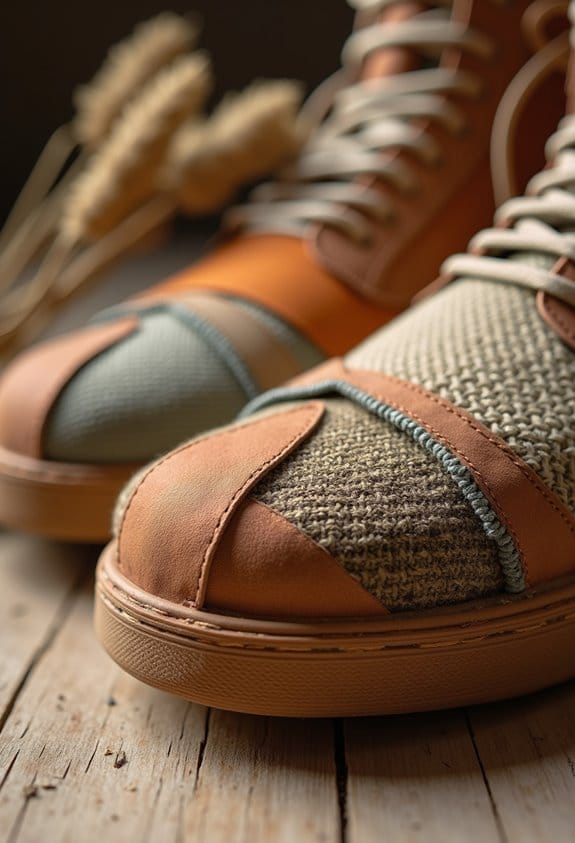
A clever twist on sustainability comes with upcycling footwear, transforming old clothes and plastic bottles into stylish shoes that keep waste out of landfills and oceans—where over 6 million tonnes of trash pile up yearly. What sets upcycling vs recycling apart? Upcycling gives materials a second life without heavy reprocessing, saving energy and water while reducing carbon emissions. Beyond environmental perks, upcycled shoes often boast unique, limited-edition designs appealing to those seeking a sustainable life with flair. Plus, brands like Thousand Fell close the loop, encouraging customers to return old shoes for recycling. This not only cuts waste but supports local economies and empowers micro-entrepreneurs—a win-win for the planet and people alike. Upcycling proves that style and sustainability can truly walk hand in hand! In addition, many eco-friendly shoes incorporate recycled PET bottles and ocean plastics, demonstrating a firm commitment to sustainable materials.
Energy Consumption in Recycling Vs Upcycling
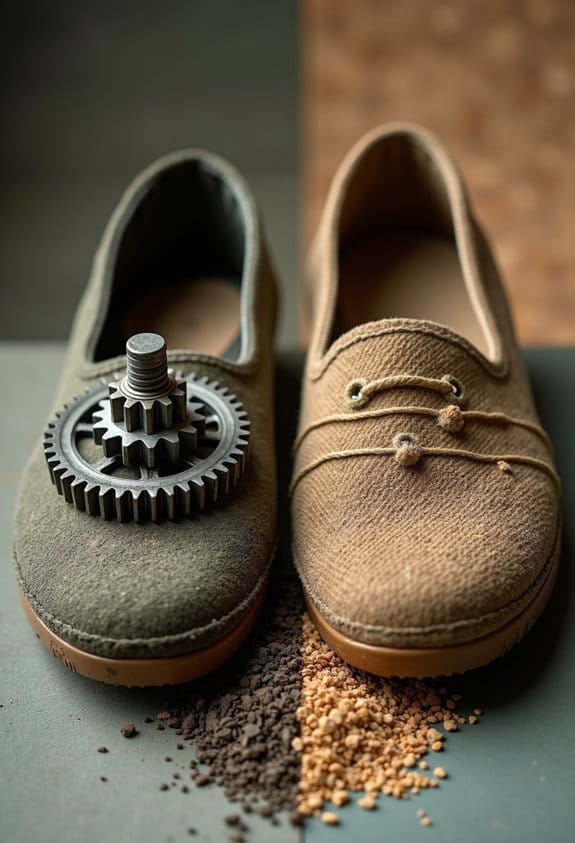
Although recycling helps conserve resources, it demands a surprising amount of energy to transform old shoes into new materials. Mechanical recycling, especially of textiles, can consume up to 20,000 megajoules of energy per ton — that’s like powering a small town! This high energy consumption comes from sorting, shredding, and chemical treatments, making recycling a hefty carbon footprint contributor. Upcycling, on the other hand, is much lighter on energy. It creatively repurposes materials, often using simple hand tools without electricity. Why burn so much energy breaking materials down when you can skip steps and get crafty? Upcycling’s lower energy needs mean fewer greenhouse gases and pollution, offering a smarter, more sustainable way to give old shoes new life with just imagination and elbow grease. Additionally, integrating natural rubber and organic materials in upcycled shoes further enhances sustainability by reducing reliance on synthetic polymers.
Common Materials Used in Recycled Shoes
Energy and innovation make recycled shoes stand out, but what materials actually go into them? Common recycled components include post-consumer plastic bottles turned into polyester yarn, lending durability and flexibility to shoes. Rubber from discarded tires is another popular choice, repurposed for soles that grip well and keep waste out of landfills. Recycled cotton from textile waste often softens shoe uppers, supporting sustainable resource use. Ever heard of reclaimed foam? It’s scooped from manufacturing scraps to boost comfort while preventing extra landfill clutter. Combining recycled polyester (rPET) with EVA foam creates lightweight, cushioned footwear, reducing environmental impact impressively. So, recycled materials aren’t just eco-friendly buzzwords—they’re practical, waste-busting heroes quietly turning trash into trendy, dependable shoes. Who knew saving the planet could feel so comfortable and stylish? Many ocean plastic sneakers use recycled ocean plastic collected from marine waste to create durable and eco-conscious footwear options.
Creative Processes Behind Upcycled Shoe Components
Transforming old denim scraps and discarded rubber into brand-new shoe components may sound like magic, but it’s all part of the creative upcycling process in footwear. Upcycling turns what some see as mere textile waste into stylish, functional parts for shoes, giving these materials a second chance without heavy machinery or energy draining processes. Brands like Thousand Fell lead the charge, crafting new products from post-consumer scraps—proof that trash can be treasure! This approach reduces the need for fresh raw materials, cutting down carbon footprints and conserving water. Upcycling also sparks innovation, pushing designers to think outside the box and create unique shoes that stand out while helping the planet. So, who knew that saving the world could start with a pair of shoes? This method also complements efforts in reducing carbon emissions by diverting waste from landfills and minimizing resource extraction.
Role of Recycling and Upcycling in Reducing Landfill Waste
Millions of shoes and about 1.1 billion umbrellas take an unfortunate journey to landfills every year—talk about a pile-up! Instead of tossing these items into the recycling bin, recycling transforms materials like plastic from old shoes into raw components for new products, reducing tonnes of textile waste heading to landfills. Meanwhile, upcycling involves creatively repurposing worn-out sneakers into trendy designs, giving them new life and keeping them out of trash heaps. Together, recycling and upcycling tackle landfill waste by minimizing discarded materials and extending product lifespans. While recycling is great, upcycling adds a clever twist by maximizing existing resources, proving that turning old into new isn’t just smart—it’s essential for a cleaner planet. Who knew shoes could save the day? Vegan footwear also contributes by using recycled plastic materials, which further supports reducing landfill waste.
Carbon Emission Differences Between Recycling and Upcycling
When it comes to shrinking the shoe industry’s carbon footprint, how do recycling and upcycling stack up? Recycling shoes demands energy-heavy processes—think mechanical shredding and chemical treatments—that pump out considerable carbon emissions. In contrast, upcycling works smarter by reusing materials directly, skipping the energy-sucking steps. Studies show upcycling can cut carbon emissions by up to 75% compared to making new shoes from recycled materials, which still need raw resource processing. Plus, upcycling extends material life, minimizing the need for fresh inputs and lowering overall environmental impact. So, while recycled shoes aren’t bad (they’re better than landfills!), upcycling feels like the eco-friendly trendsetter’s choice, tackling carbon emissions head-on with less fuss and more style. Who knew saving the planet could be so chic? Moreover, using sustainable materials like organic cotton and natural rubber further amplifies the environmental benefits of upcycled footwear.
Consumer Influence on Choosing Recycled or Upcycled Shoes
How much sway do shoppers hold over the rise of recycled versus upcycled shoes? Quite a bit! With 66% of consumers globally willing to pay more for sustainability, their choices drive demand for both recycled and upcycled footwear. Recycled shoes use processed waste, cutting down on new materials, while upcycled shoes creatively transform existing items—each pair unique, appealing to individuality lovers. This uniqueness, plus research showing upcycled goods keep more resource value than recycled ones, nudges eco-aware buyers toward upcycling. Meanwhile, increased calls for transparency in sourcing push brands to meet higher standards. So, when people put their money where their values are, they not only influence trends but also encourage the shoe industry to innovate greener, smarter practices—making every step a bit more planet-friendly (and stylish!).
Brands Leading the Way in Recycled and Upcycled Footwear
Customer demand for sustainable shoes doesn’t just shape sales—it pushes companies to get creative with materials and production. Leading brands like Thousand Fell make circular footwear using recycled materials, letting customers return old shoes for credit through their SuperCircle program—talk about keeping waste on a tight leash! Nike’s “Reuse-a-Shoe” program grinds up old sneakers to craft new products, proving that recycling can be a game-changer. Adidas tackles ocean waste with its Parley line, transforming marine plastics into fashionable, high-performance kicks. Veja cleverly incorporates recycled bottles and other waste into trendy sneakers, while Allbirds’ “Sugarcane” shoes focus on renewable resources and carbon neutrality. Clearly, recycled materials are not just a trend—they’re reshaping the fashion industry in exciting, waste-reducing ways. Many of these brands highlight environmental certifications to validate their sustainable manufacturing processes and assure customers of their eco-friendly credentials.
Frequently Asked Questions
What Is the Difference Between Recycled Material and Upcycled Material?
Recycled material hopelessly industrializes waste, turning it into lower-quality shoe fodder, while upcycled material, the crafty rebel, cleverly reuses items, boosting sustainability practices and reducing environmental impact through inventive material sourcing. Genius or madness?
What Are Recycled Shoes Made Of?
Recycled shoes in sustainable footwear frequently utilize reclaimed polyester from plastic bottles, rubber from old tires, and recycled foam. This material sourcing notably lowers environmental impact by reducing energy, water use, and waste during production.
Which Is Better, Upcycling or Recycling?
Upcycling is generally better due to its greater sustainability benefits, reduced environmental impact, and enhanced aesthetic value. It avoids energy-intensive processes, creatively repurposing materials, whereas recycling, though sustainable, often diminishes material quality and uniqueness.
What Is the Difference Between Upcycling and Recycling?
Upcycling breathes new life into discarded materials, crafting treasures, while recycling melts them back to origin. These sustainability practices differ in environmental impact and waste reduction: upcycling innovates value, recycling restores raw materials through energy-intensive processes.